
Medical Retina Specialist in Miranda
You may have been referred for a retinal assessment because you've noticed distortion, blurring, flashes or floaters, or sudden vision loss. Or you may already have a diagnosis and need ongoing treatment. Either way, prompt assessment is important.
Seek prompt assessment if you notice
- New distortion in your vision
- Sudden blurring
- Flashes or floaters
- A shadow or missing area in your vision
- Sudden loss of central vision
To arrange a retinal assessment at our Miranda rooms in the Sutherland Shire, call (02) 8544 0719.
In retinal disease, timing matters. The sooner we can assess and begin treatment, the better the chance of preserving vision.— A/Prof Adrian Hunt, FRANZCO PhD
The retina and the macula — the foundation
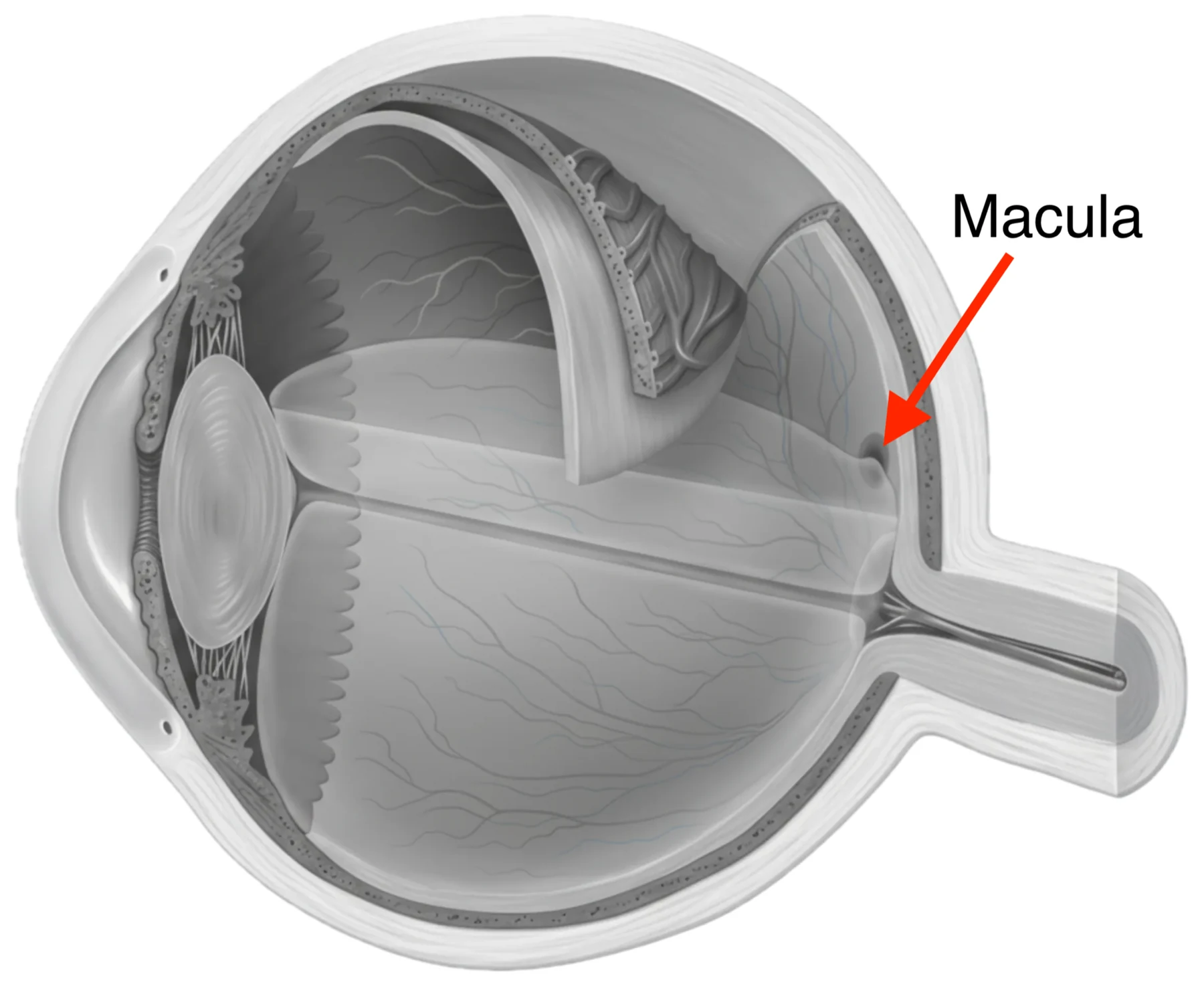
Almost everything in medical retina comes back to two structures at the back of the eye. The retina is the thin, light-sensitive layer lining the inside of the back of the eye; it captures light and converts it into the signals sent to the brain. At its centre sits the macula — the small area responsible for the sharp, detailed central vision you use to read, recognise faces and see colour.
The conditions covered here affect the retina in one of two ways: through the macula itself (as in macular degeneration or an epiretinal membrane), or through its blood vessels (as in diabetic eye disease or retinal vein occlusion). It is also the part of the eye captured in the retinal photographs and OCT scans used throughout these pages.
Imaging and treatment in the rooms
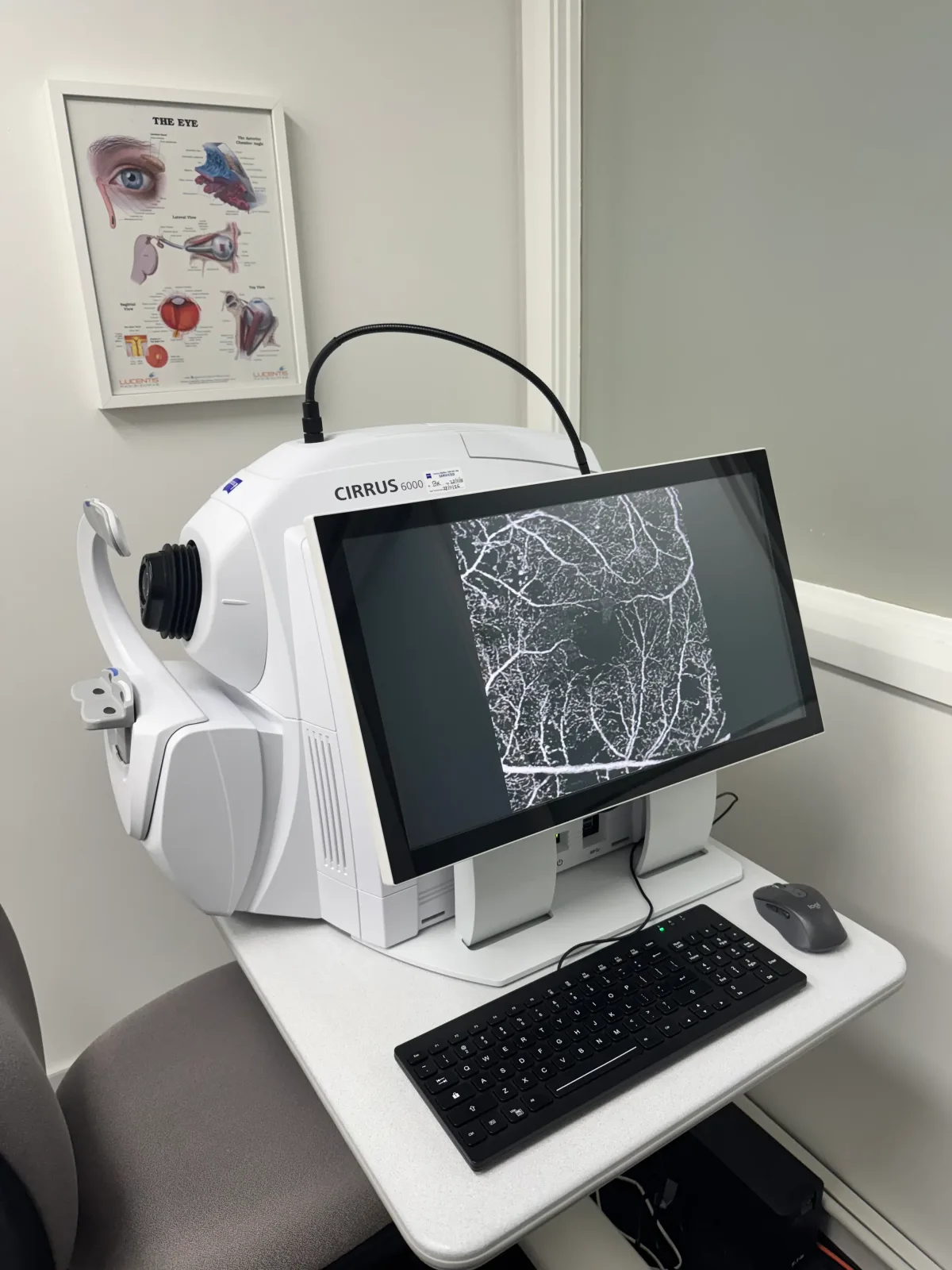
Retinal assessment, OCT (optical coherence tomography) imaging with angiography, eye injections, and retinal laser are all performed here in the consulting rooms. Every treatment decision is guided by imaging at each visit.
The practice is equipped with a Zeiss Cirrus 6000 OCT with AngioPlex — providing high-resolution structural and vascular imaging of the retina to guide diagnosis and monitor treatment response.
Retinal conditions and treatments
Retinal care informed by research
A/Prof Hunt is a subspecialty-trained medical retina specialist with a PhD in retinal disease from the University of Sydney. He has been performing intravitreal injection therapy since 2007, and his research through the Fight Retinal Blindness! registry directly informs how he manages these conditions in practice.
Common questions
What conditions does a medical retina specialist treat?
Medical retina covers the diagnosis and long-term management of conditions affecting the macula and retinal vasculature — including macular degeneration, retinal vein occlusion, diabetic eye disease, and epiretinal membrane. Assessment for new or unexplained visual symptoms — distortion, blurring, flashes, floaters, or sudden vision change — is also available.
What is an intravitreal injection?
An intravitreal injection delivers medication directly into the eye to treat conditions that cause fluid, swelling, or abnormal blood vessel growth in the retina. It is the main treatment for wet macular degeneration, retinal vein occlusion, and diabetic macular oedema. The procedure is performed in the consulting room and is almost always far less uncomfortable than patients expect. What to expect from eye injections is covered in full.
How often will I need treatment?
Retinal conditions typically require ongoing monitoring and, for many patients, ongoing injection treatment — at least initially. The schedule is adjusted at every visit based on what the OCT scan shows. Some patients stabilise and extend to longer intervals; others require consistent treatment over the long term. The plan is tailored to how your condition responds.