
Corneal Foreign Body Removal in Miranda
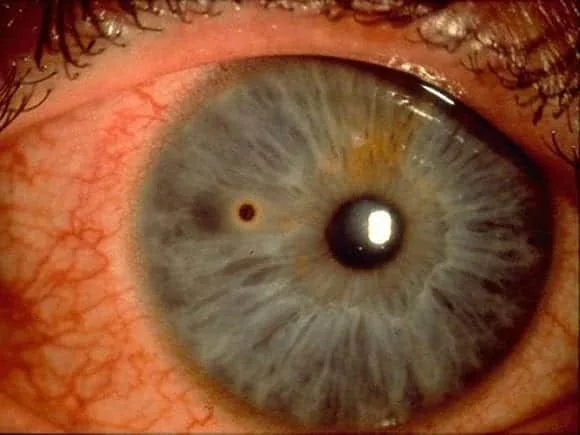
Corneal foreign bodies — metal, grit, timber, or other debris lodged on the surface of the eye — are one of the most common urgent eye presentations. At Eye Surgeons Miranda, A/Prof Adrian Hunt assesses and removes corneal foreign bodies in the rooms, usually the same day you call.
This is a particularly common injury across the Sutherland Shire, given the concentration of trades and industrial activity around Taren Point, Kirrawee, and Kurnell. Grinding, welding, drilling, angle cutting, and outdoor work in the wind are the usual causes.
Most foreign bodies can be lifted from the corneal surface quickly and comfortably under numbing drops. The eye usually feels dramatically better as soon as the particle is gone, and a brief follow-up confirms the surface has fully healed.

Metal-on-metal injury — seek urgent care
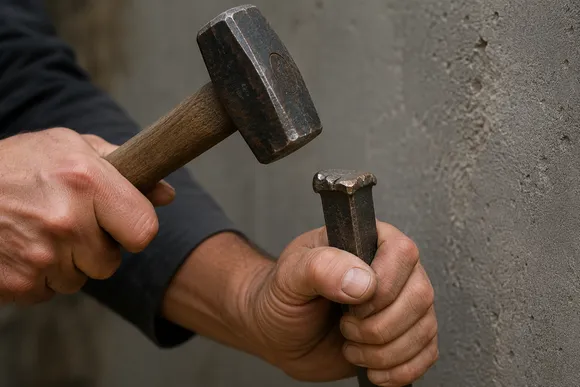
A metallic fragment thrown off at high speed — typically from striking metal on metal, such as a hammer on a chisel — can behave like a tiny piece of shrapnel. It can do something a surface injury cannot: pass straight through the outer wall of the eye rather than simply embedding on its surface. If your injury happened this way, it raises the level of concern. The eye can look and feel almost normal, and yet a tiny fragment may have penetrated it and lodged inside — a serious problem that needs urgent attention. Do not wait to see if it settles.
A/Prof Hunt can assess the eye and determine what needs to happen next — managing it directly where appropriate, or arranging urgent removal of a foreign body from inside the eye. For urgent review, call our rooms on (02) 8544 0719 to arrange an urgent appointment. After hours, Sydney Eye Hospital Emergency can provide assessment.
How Is a Foreign Body Removed from the Eye?
Assessment begins with numbing drops and a careful look at the eye under high magnification on the slit lamp microscope. A/Prof Hunt locates the foreign body, checks how deep it sits, and looks for any associated abrasion, infection, or surrounding rust.
Most superficial corneal foreign bodies are lifted off the surface in the rooms in a few minutes under the numbing drops. The eye is rarely padded, antibiotic drops are prescribed to prevent infection while the surface heals, and a follow-up visit is arranged to confirm healing is complete. The vast majority of patients describe immediate relief once the particle is gone.
Deeper or penetrating injuries are a different situation and are managed urgently in a hospital eye casualty setting — the case described in the urgent care box above.
What Is a Rust Ring and Why Does It Matter?
Iron or steel particles begin to oxidise within hours of landing on the cornea, leaving a small ring of rust in the corneal tissue around the fragment — as pictured at the top of this page. The rust itself is irritating and slows healing, so it is removed at the same visit using a fine instrument under the slit lamp. Occasionally a small amount of residual rust is easier to remove at a follow-up visit a day or two later, once the surrounding tissue has softened — this is normal and does not affect the eventual outcome.
Why Prompt Removal Matters
Corneal foreign bodies should be removed as soon as possible. The longer a particle sits on the cornea, the greater the risk of infection, rust ring formation, and scarring. Seek same-day assessment if any of the following apply:
- Persistent pain, grittiness, or the feeling that something is still in the eye
- The eye is sensitive to light or watering constantly
- Vision is blurred or reduced in the affected eye
- You were grinding, drilling, or striking metal on metal — see the urgent care box above
- The injury involved chemicals, vegetation, or anything dirty
- Symptoms have not settled within a few hours of the original injury
Wearing well-fitted safety eyewear during high-risk work is by far the best protection — but if something has got past it, an assessment is the right next step.
About A/Prof Adrian Hunt → Red eye — when to seek urgent assessment → Eye symptoms — when to see a specialist →Common Questions
Does it hurt to have a foreign body removed from the eye?
No — numbing drops are placed in the eye first and the surface is genuinely numb within seconds. Most patients describe the removal itself as a strange sensation rather than a painful one, and feel dramatically better immediately afterwards as the original irritation lifts.
How long does foreign body removal take?
The removal itself usually takes only a few minutes once the eye is numb. The whole visit — assessment, removal, antibiotic drops, and aftercare instructions — is generally over within half an hour.
Can I drive home after foreign body removal?
In most cases yes. The numbing drops wear off within about twenty minutes and there is no sedation involved. If the eye has been padded, or if both eyes have been treated, arranging a lift home is sensible.
What is a rust ring in the eye?
When iron or steel lands on the cornea, it begins to oxidise within hours and leaves a small ring of rust in the surrounding tissue. The rust is irritating and slows healing, so it is removed at the same visit. Occasionally a small amount is easier to remove at a follow-up visit a day or two later, once the tissue has softened.
How long does the eye take to heal after foreign body removal?
The corneal surface usually heals within 24 to 72 hours. Antibiotic drops are used during this time to prevent infection. A follow-up visit confirms the surface is fully healed and that there is no residual rust or scarring.
When can I go back to work after a foreign body in the eye?
Most patients can return to light duties the next day with antibiotic drops continuing for several days. High-dust or grinding work is best avoided until the eye is fully healed and A/Prof Hunt confirms it is safe to resume — usually within a week. Wear well-fitted safety eyewear when you return.