
Lens Choices
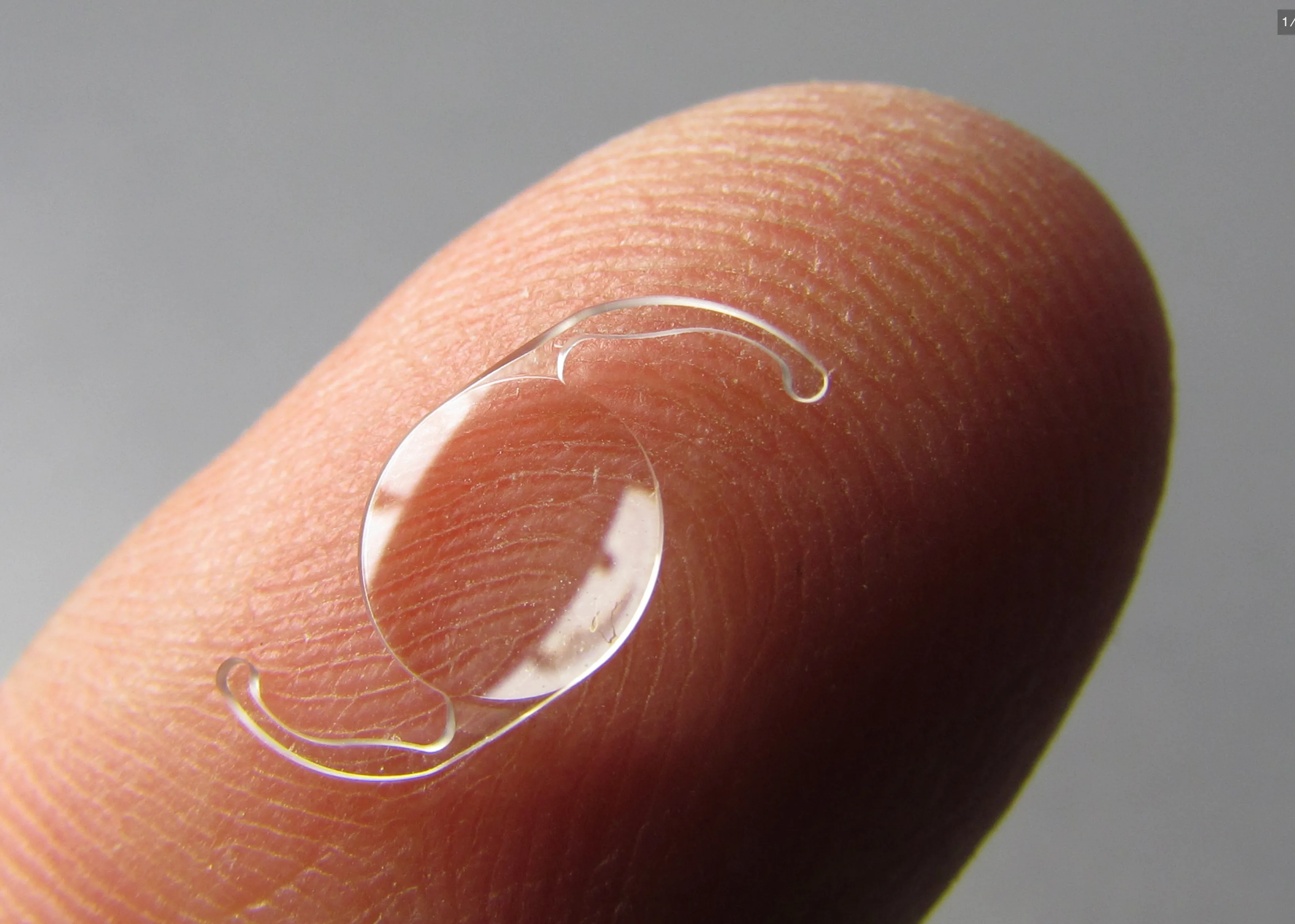
During cataract surgery, your cloudy natural lens is replaced with a clear intraocular lens implant. There are different types of intraocular lens implants available, and the one recommended for you will depend on your eyes and your visual goals.
There is no single best lens. The right choice depends on your eyes, your lifestyle, and what matters most to you.
How We Decide Together
Lens choice isn't a menu you pick from. It's a conversation. A/Prof Hunt takes into account your daily visual priorities — whether you drive at night, or if reading without glasses is important to you. He also considers whether you have astigmatism, along with any other eye conditions that may influence the result.
Detailed measurements of your eye are taken to guide the decision — and in many cases, the right lens becomes clear once those factors are considered together. A/Prof Hunt has been working with the full range of lens options since 2011.
Many patients with cataracts also have retinal conditions — and this changes the lens conversation significantly. A/Prof Hunt's subspecialty expertise in both cataract surgery and medical retina means both conditions are considered together when planning your surgery.
Understanding the Lens Spectrum
It helps to think of the main lens types as a spectrum.
At one end is the monofocal lens — a single-focus lens that provides excellent optical quality at one distance. It typically delivers the sharpest, most reliable vision with the fewest side effects. Reading glasses are used for near tasks.
In the middle sits the extended depth of focus (EDOF) lens, which stretches the range of clear vision rather than splitting it into distinct focal points. EDOF lenses offer good functional range with fewer side effects than multifocals, though most patients still need reading glasses for sustained close work.
At the other end is the multifocal lens, which splits incoming light into multiple focal points — distance, intermediate, and near. The payoff is reduced dependence on glasses for most daily tasks. The trade-off is a modest reduction in contrast and an increase in halos and glare, particularly at night.
Toric lenses correct astigmatism and can be combined with any of the above types when astigmatism is present.
Frequently Asked Questions
Will I still need glasses after cataract surgery?
It depends on the lens power and the type. Some patients still need glasses for reading or close work. Others may achieve greater independence from glasses. Some patients who have always been able to read without glasses prefer to maintain that ability, even if it means still wearing glasses for distance. These preferences are all part of the conversation during your consultation.
Can astigmatism be corrected during cataract surgery?
Yes. Toric intraocular lenses are designed to correct astigmatism at the time of surgery.
Can the lens implant itself become cloudy or wear out?
The common cause of clouding after cataract surgery is the membrane behind the lens (posterior capsular opacification), not the lens itself. The implant becoming cloudy is extremely rare — it is seen almost only with newer lens materials that lack a long safety record, where a problem called dystrophic calcification can slowly turn the lens translucent years later. Because the lens stays in your eye for life, A/Prof Hunt uses only well-established lenses with a proven track record.