
Distorted Vision: When Straight Lines Look Bent or Wavy
Central Distortion Requires Prompt Assessment
Swelling at the macula is the usual cause of distortion in the central vision. Most of the conditions responsible require prompt treatment, and delay generally reduces the likelihood of a good outcome.
Call (02) 8544 0719. Assessment within days, not weeks.
What Distorted Vision Looks Like
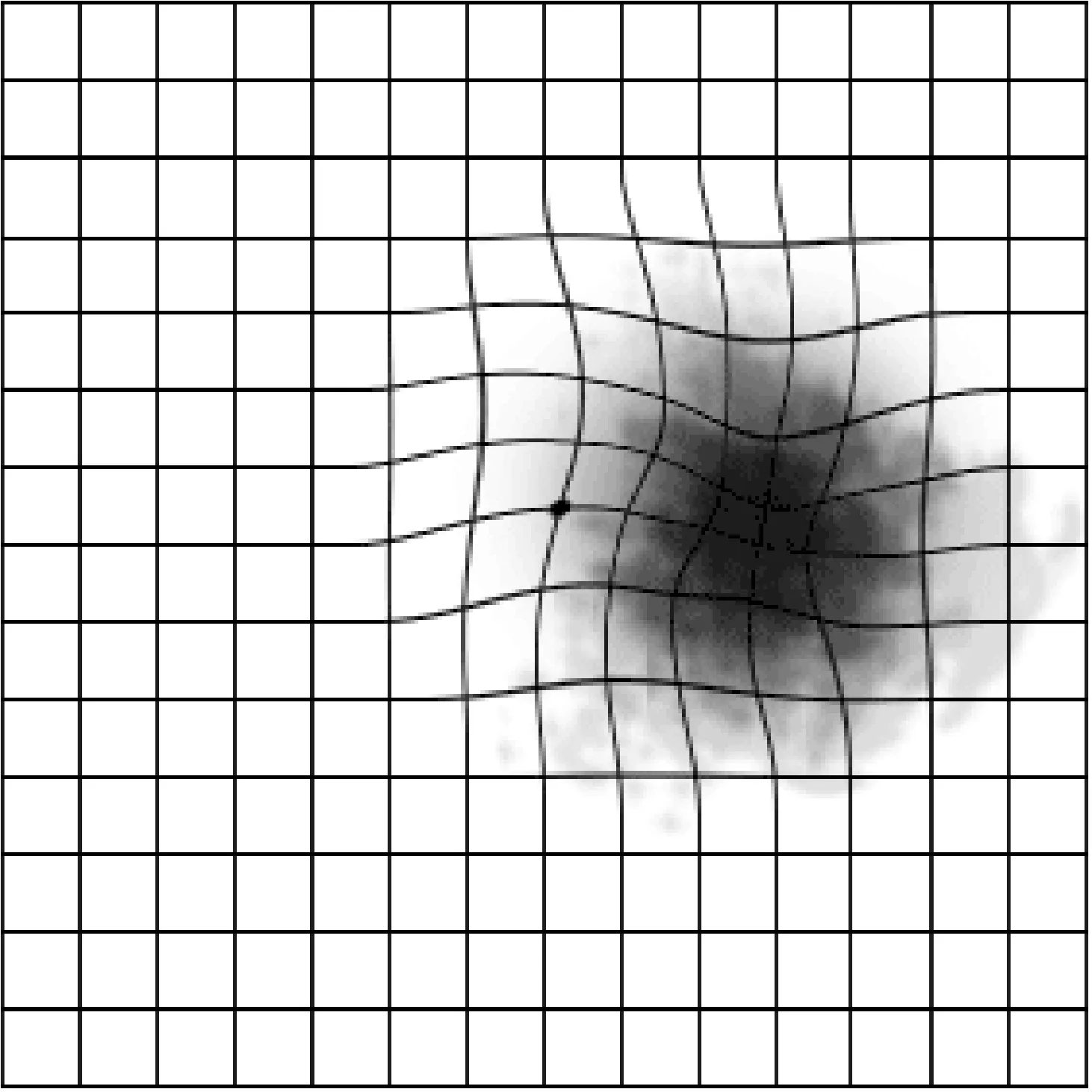
Distortion is not the same as blurred vision. Rather than everything appearing uniformly hazy, straight lines and regular shapes look warped or bent. There is often a dull grey smudge in the central vision as well.
Because both eyes are normally open, the unaffected eye compensates for the other, so distortion in one eye often goes unnoticed until each eye is tested separately. That is why many patients present later than they might have.


What Causes Distorted Vision?
Central distortion in one eye usually indicates a problem in the macula, the central part of the retina responsible for detailed vision. There can be several conditions that cause it, all of which need assessment sooner rather than later.
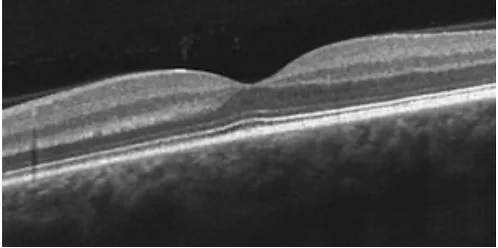
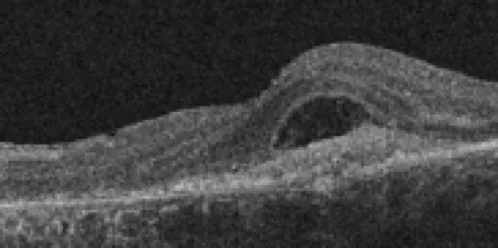
If the macula is out of shape due to disease, your perception of straight lines will be too.
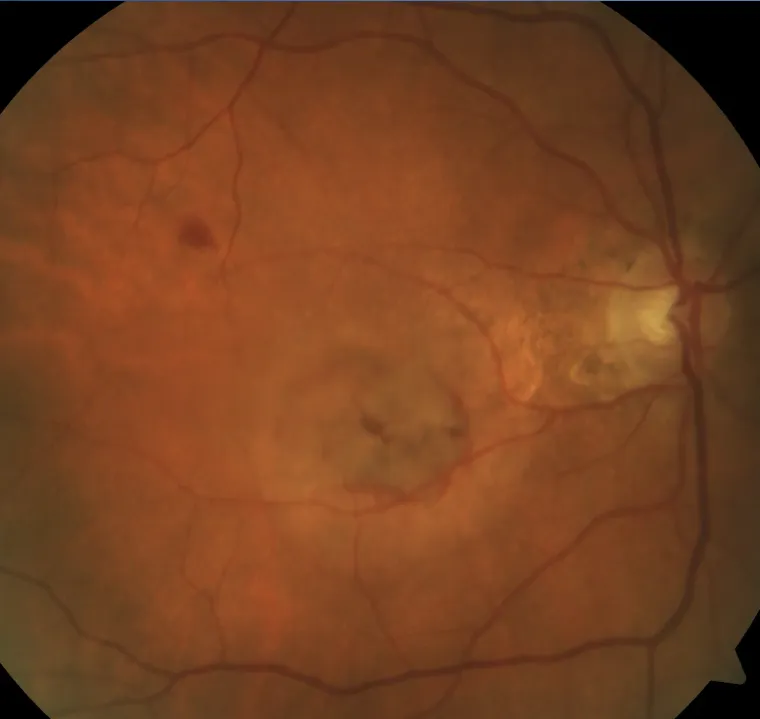
Wet macular degeneration
Leaking blood vessels beneath the macula. The commonest cause of new distortion after the age of 60.
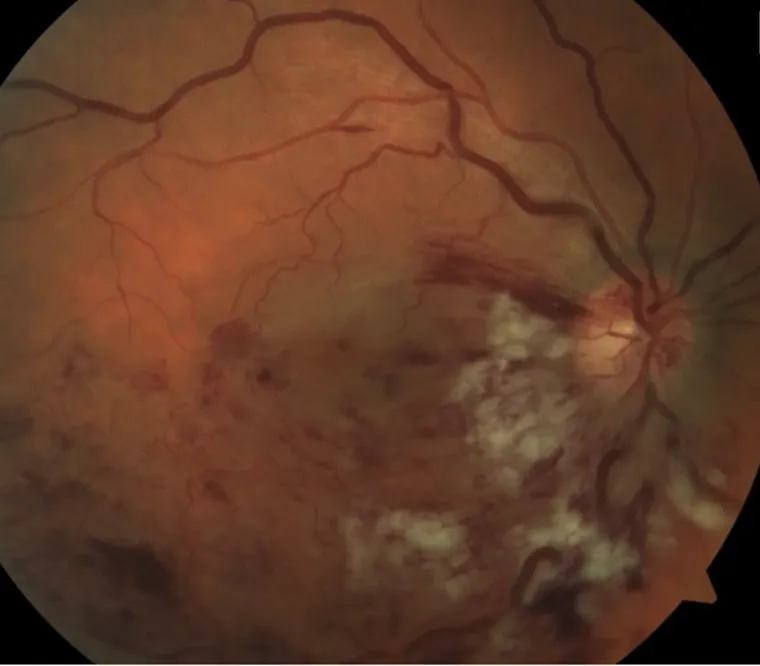
Retinal vein occlusion
A blocked vein draining the retina. Fluid leaks into the macula, which is what reduces the vision.
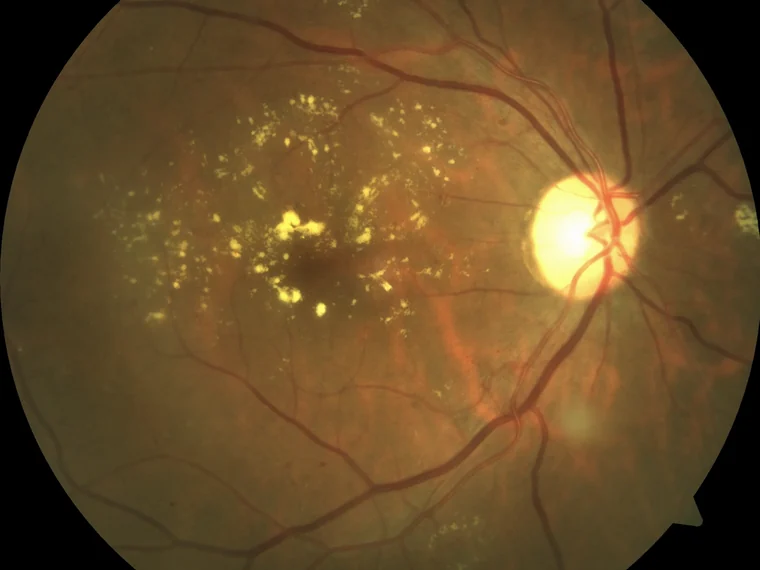
Diabetic macular oedema
Fluid collecting at the macula as a complication of diabetes. It can build silently.
How Quickly Does Distortion Come On?
It varies. Some distortion appears rapidly, while in other cases it worsens gradually over time.
It can also feel sudden simply because of when you notice it rather than when it began. Covering the good eye for the first time often brings a sudden realisation that something has been wrong in the other eye for a while.
Either way it needs assessing. New distortion is an important symptom and not one to ignore, and the speed of onset is a clue to the cause rather than a measure of how serious it is.
The Amsler Grid: A Simple Self-Check
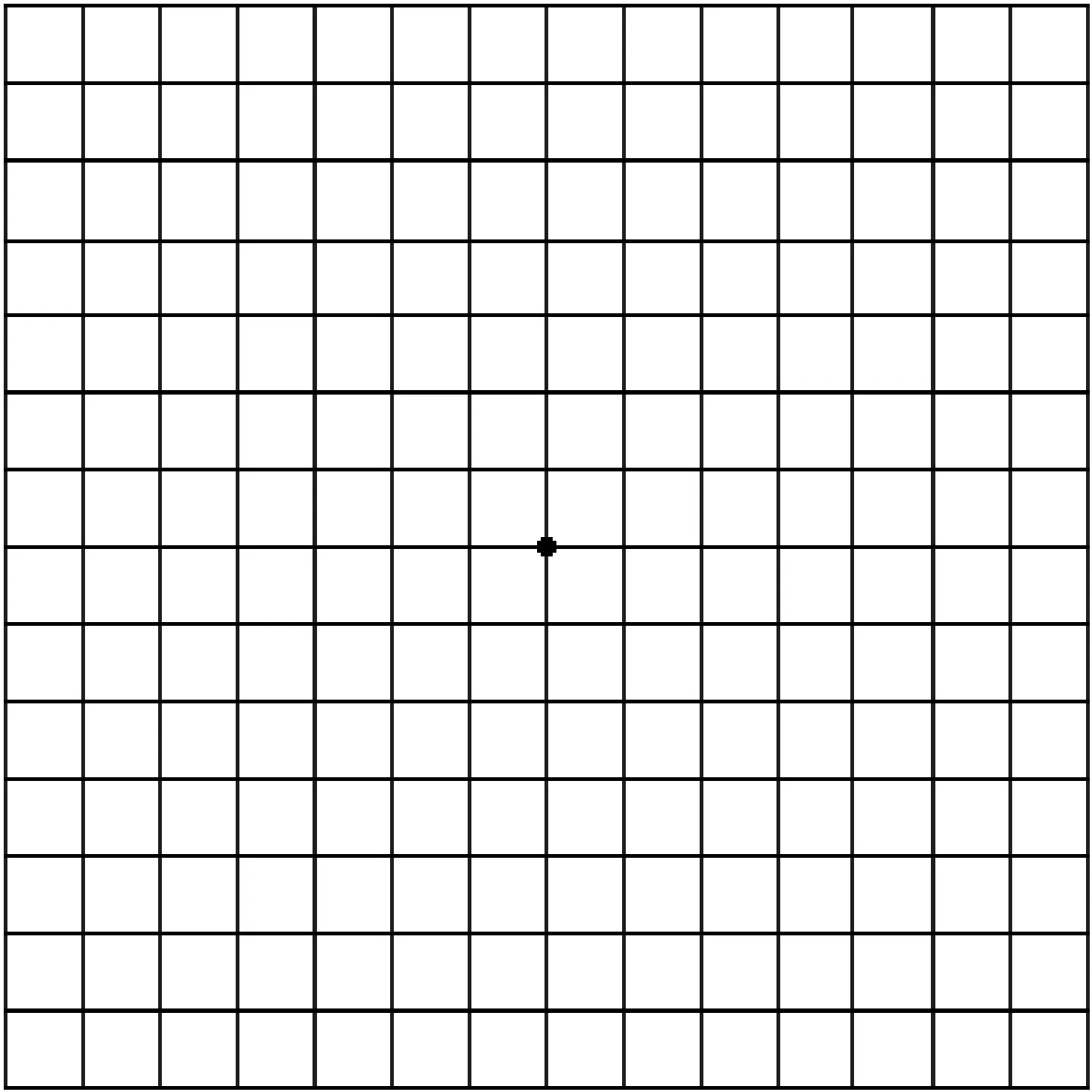
The Amsler grid (see below) is a formal way of testing each eye individually with reading glasses on. It is frequently used to detect new distortion in the macula due to macular degeneration, retinal vein occlusion, or diabetic macular oedema.
More often than not, a patient will detect distortion on everyday items such as a wall of tiles, the blinds in a window or a balcony rail.
Even if the Amsler grid looks normal, any concern about your vision should prompt you to arrange assessment.
Frequently Asked Questions About Distorted Vision
How urgent is distortion?
If distortion is new, you should be seen as a priority. Call the rooms and let us know that you have new distortion. We will prioritise your appointment accordingly.
Why has my vision gone wavy all of a sudden?
It may be genuinely sudden. Retinal vein occlusion happens out of the blue, and in wet macular degeneration new distortion arises over days to weeks. It may also be that the distortion had been there for a while and was only found when the good eye was covered. Either way, new distortion should be assessed as a priority.
What about wavy or zigzag lines, or flashes, at the edge of my vision?
These are usually different problems that nevertheless should be assessed. Distortion arising from the macula affects whatever you look at directly. Symptoms at the edge of vision come from elsewhere: zigzag or shimmering lines may be more typical of a migraine aura, and flashes in the periphery could indicate a retinal tear - flashes and floaters.
I have dry macular degeneration. Does distortion mean it has changed?
Quite possibly. New distortion in a patient with known dry AMD may indicate conversion to the wet form, which requires prompt assessment and, if confirmed, treatment. Do not assume that new symptoms are simply part of the existing dry AMD. All patients with any form of macular degeneration should watch out for distortion, or a blob in their central vision, that could herald the onset of neovascular (wet) AMD. There are also other causes of distortion, such as epiretinal membrane.
Can distortion be treated?
Yes, in most cases. The sooner you are assessed and treatment begins, the better the outcome usually is. Arrange an appointment as soon as you can.