
Epiretinal Membrane
An epiretinal membrane is a fine sheet of scar-like tissue that forms across the surface of the macula — the part of the retina responsible for central, detailed vision. In its early stages it is transparent, a little like a layer of cling wrap laid over the retina. As the membrane matures it begins to contract, and as it tightens it puckers the delicate retinal surface beneath it — and this wrinkling is what distorts and blurs central vision.
Epiretinal membranes are common, particularly after the age of 60, and many cause no symptoms at all. When symptoms do develop, the most frequent complaint is that straight lines — a door frame, a line of text — appear wavy or bent. Because the distortion affects only the one eye, patients often find themselves wanting to close the affected eye when reading.
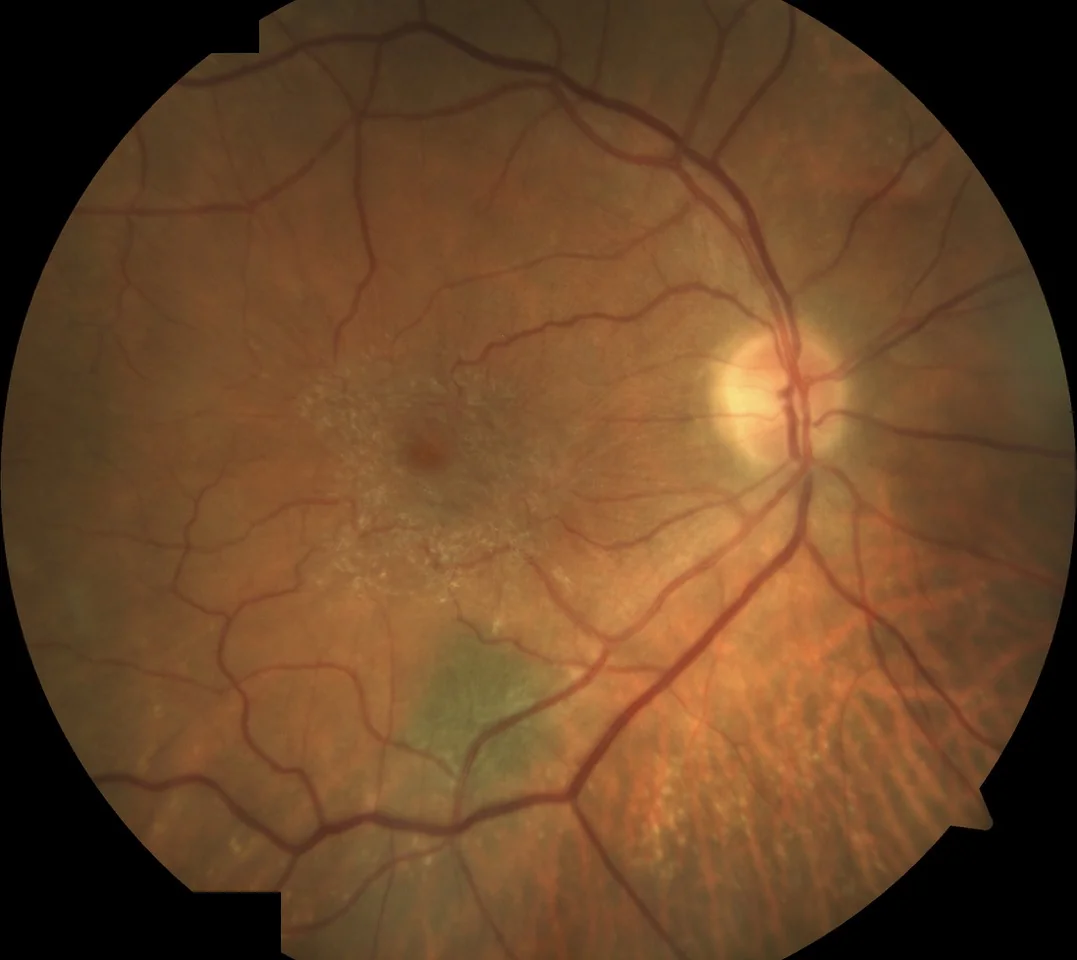
What Causes an Epiretinal Membrane?
Most epiretinal membranes develop after a posterior vitreous detachment — the normal age-related process in which the vitreous gel separates from the retinal surface. As the gel peels away, it can leave behind a residual layer of cells on the macula that slowly contracts into a membrane.
Less commonly, epiretinal membranes can form after retinal surgery, laser treatment, retinal vascular disease, or inflammation inside the eye.
Diagnosis and Monitoring
An epiretinal membrane is diagnosed on clinical examination and confirmed with OCT imaging, which shows the membrane on the retinal surface and reveals the degree of wrinkling and any traction on the underlying retinal layers.
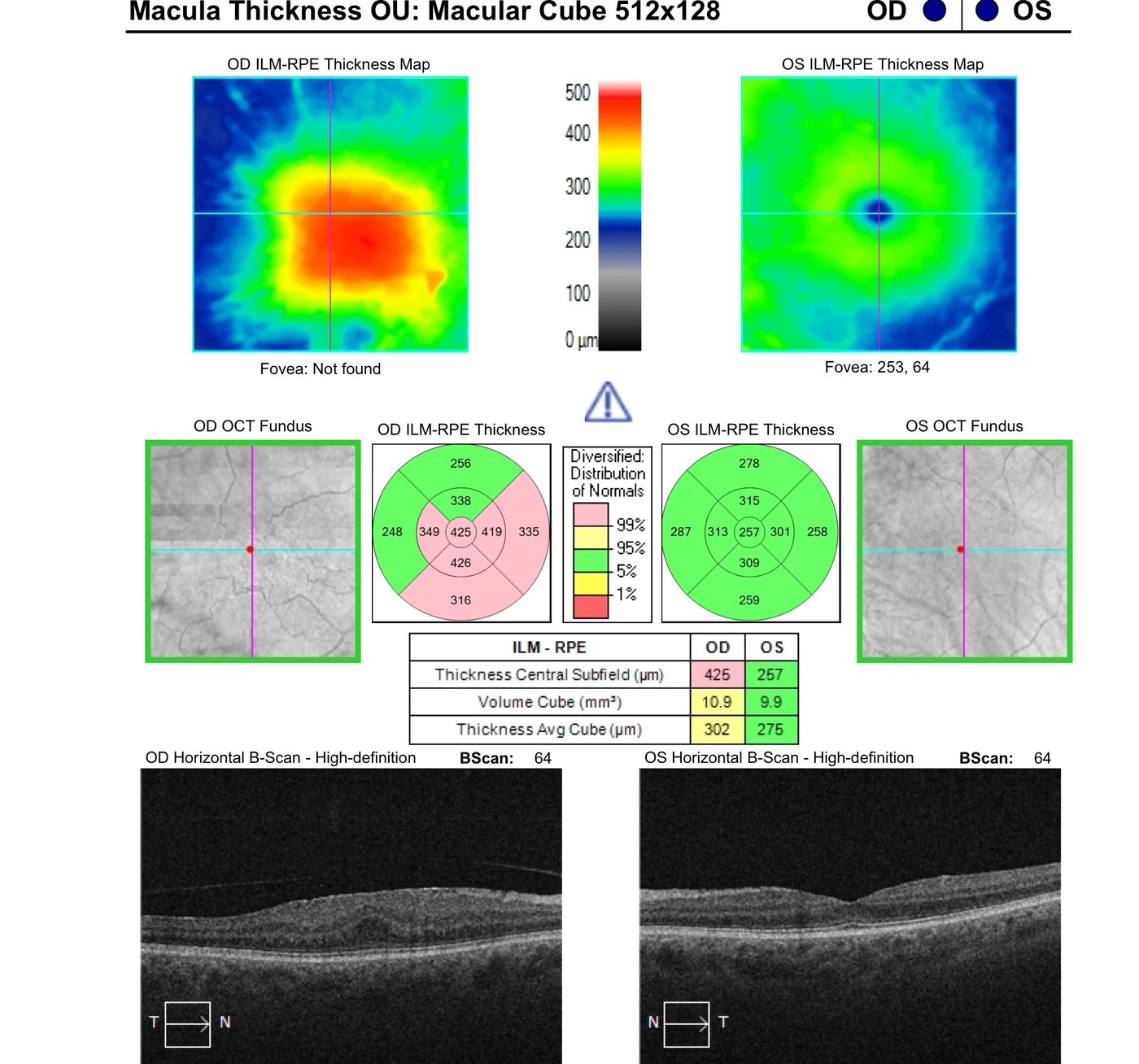
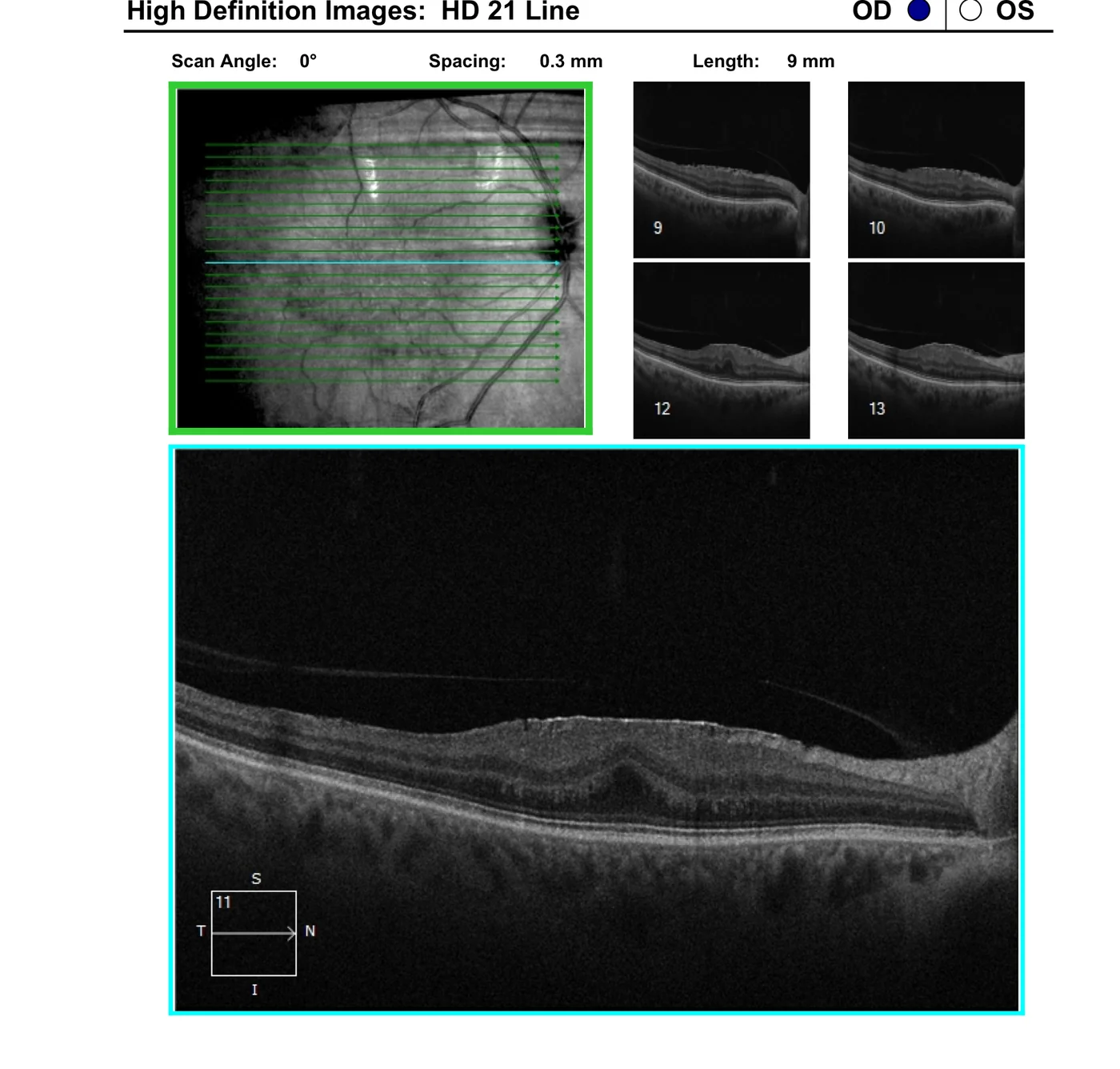
A/Prof Hunt monitors epiretinal membranes with regular OCT scans. Many membranes remain stable for years and never require treatment. The purpose of monitoring is to track whether the membrane is progressing — thickening, increasing traction, or causing structural change in the retina — so that if surgery becomes appropriate, it can be timed well rather than too late.
When Is Surgery Considered?
Surgery is considered when the membrane is affecting vision enough to interfere with daily activities. The most common trigger for referral is difficulty reading with the affected eye — patients often describe closing that eye to read, or finding that the distortion has worsened to the point where it affects their quality of life.
The decision takes into account the visual acuity, the degree of distortion, the OCT appearance, and how much the symptoms bother the patient in practice. A membrane that looks significant on a scan but causes no functional problem may not need surgery.
What Does Surgery Involve?
The operation is called a vitrectomy with membrane peel. A vitreoretinal surgeon removes the vitreous gel and carefully peels the membrane from the retinal surface under high magnification. It is performed as day surgery under local anaesthetic.
Vision typically improves gradually over weeks to months as the retina flattens and the distortion settles. The degree of recovery depends on how long the membrane has been present and how much structural change it has caused — which is why timely referral matters.
A/Prof Hunt coordinates the referral to a vitreoretinal surgeon and continues to monitor the eye with OCT after surgery to check the retinal recovery and watch for recurrence.
Common Questions
Does an epiretinal membrane always need surgery?
No. Many epiretinal membranes are mild and stable, causing little or no visual disturbance. These are monitored with regular OCT scans rather than treated. Surgery is considered when the membrane is causing enough distortion or blurring to affect daily activities — particularly reading.
What does the surgery involve?
The surgery is a vitrectomy with membrane peel — a vitreoretinal surgeon removes the vitreous gel and carefully peels the membrane from the retinal surface under high magnification. It is performed as day surgery under local anaesthetic. Vision typically improves gradually over weeks to months.
Will my vision return to normal after surgery?
Most patients notice meaningful improvement in distortion and clarity, but the degree of recovery depends on how long the membrane has been present and how much it has affected the retinal structure. Earlier referral generally leads to better outcomes.
Can an epiretinal membrane come back after surgery?
Recurrence is possible but uncommon. If it does occur, a repeat procedure can be considered. A/Prof Hunt continues to monitor the eye with OCT after surgery to check for recurrence and ensure the retina remains stable.