
Eyelid Procedures and Surgery in Miranda
In the Sutherland Shire, a lifetime spent outdoors leaves its mark on the skin around the eyes. Sun-damaged lid lesions, the gradual heaviness of excess upper lid skin, and lower lids that loosen and turn in or out with age are all common reasons people come in. Others notice a persistent lump on a lid and want to know what it is.
A/Prof Adrian Hunt assesses and treats eyelid problems at Eye Surgeons Miranda, with day surgery performed at a local private day surgery facility. The first visit works out what the lid problem is, whether anything needs to be done about it, and which approach fits best — observation, a small in-room procedure, or day surgery.
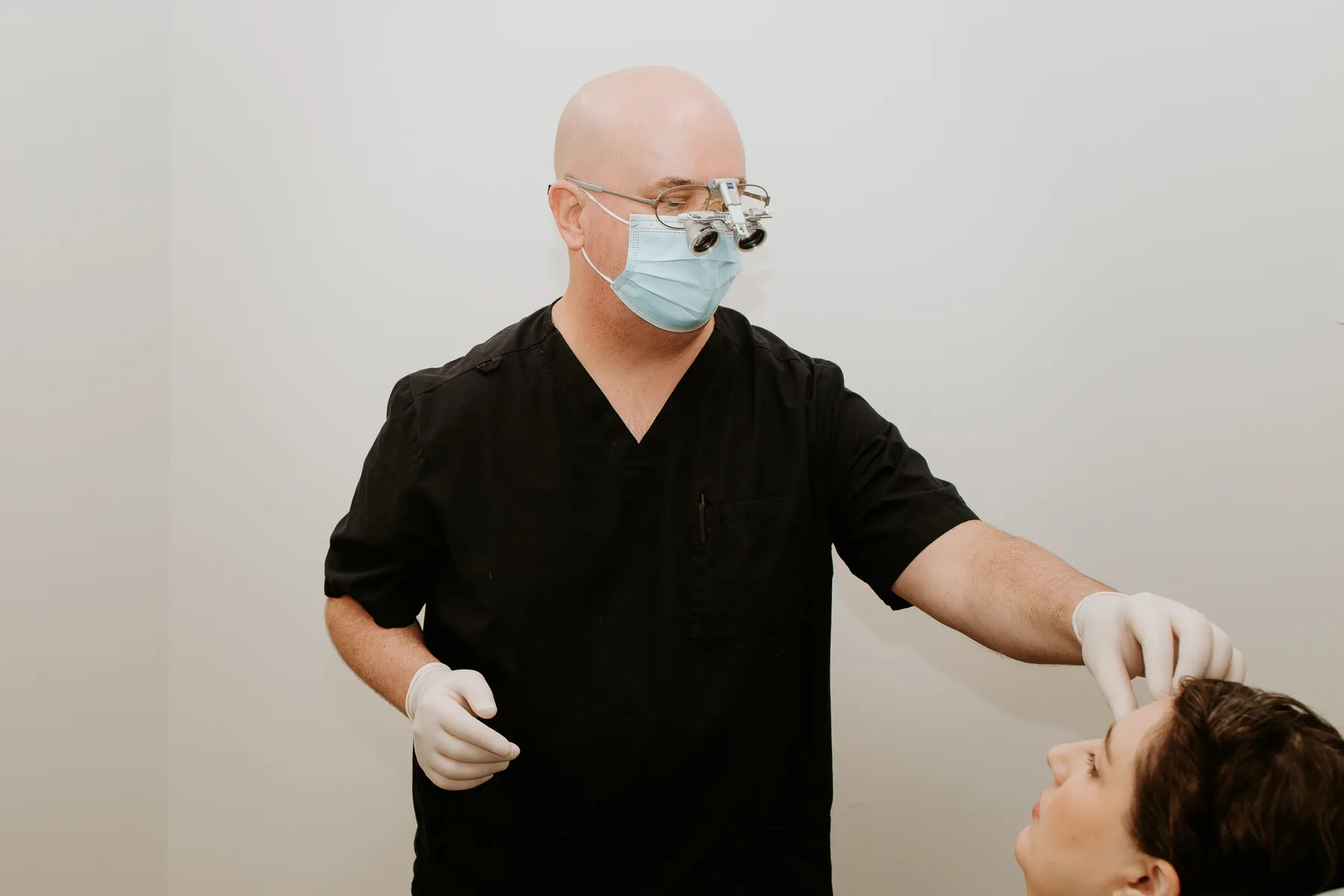
Do I Need an Upper Lid Blepharoplasty?
Upper lid blepharoplasty is the removal of excess skin from the upper eyelid. Patients usually come in to ask about it when:
- The lid feels heavy by the end of the day
- The skin is starting to obstruct the upper part of vision, particularly when reading or driving
- The fold of skin is sitting on the lashes and pushing them down
- Recurrent irritation or dermatitis is developing in the skin fold
The assessment looks at how much skin is in the way, whether it is affecting the visual field, and whether surgery is likely to make a meaningful difference to comfort or vision. Whether the problem is functional rather than cosmetic also determines whether a Medicare rebate applies, and A/Prof Hunt will tell you honestly which category your case falls into.
Both upper lids are always treated on the same day. Symmetry between the eyes matters.
Why Is My Lower Eyelid Turning In or Out?
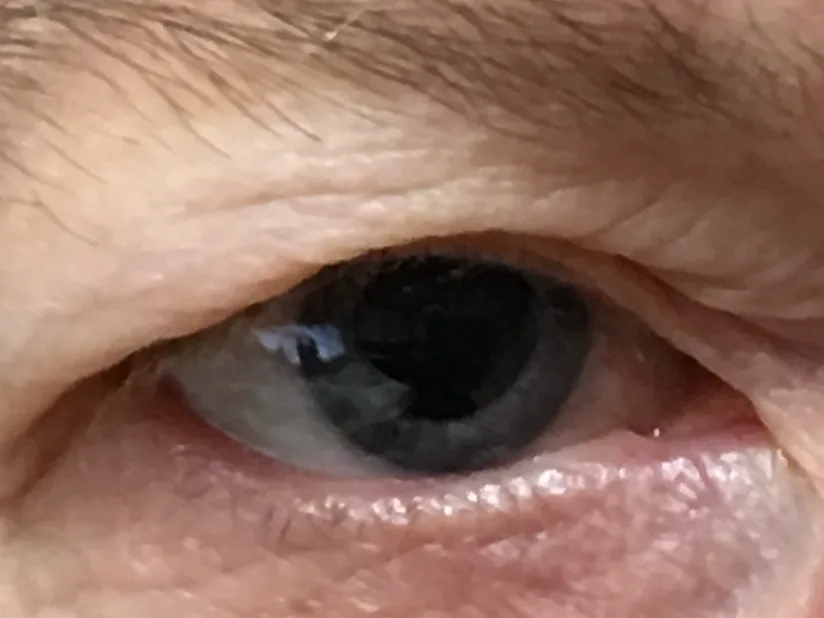
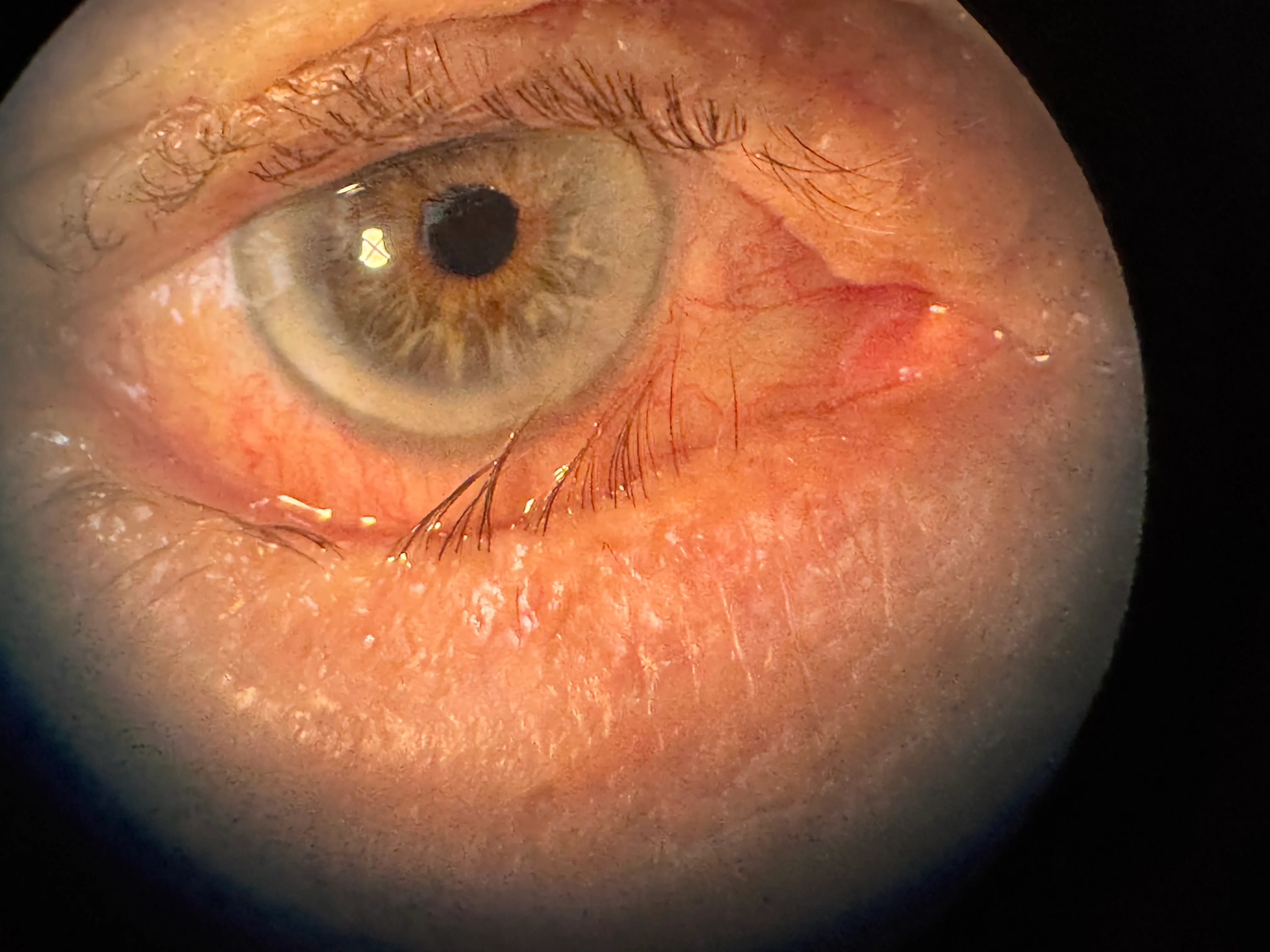
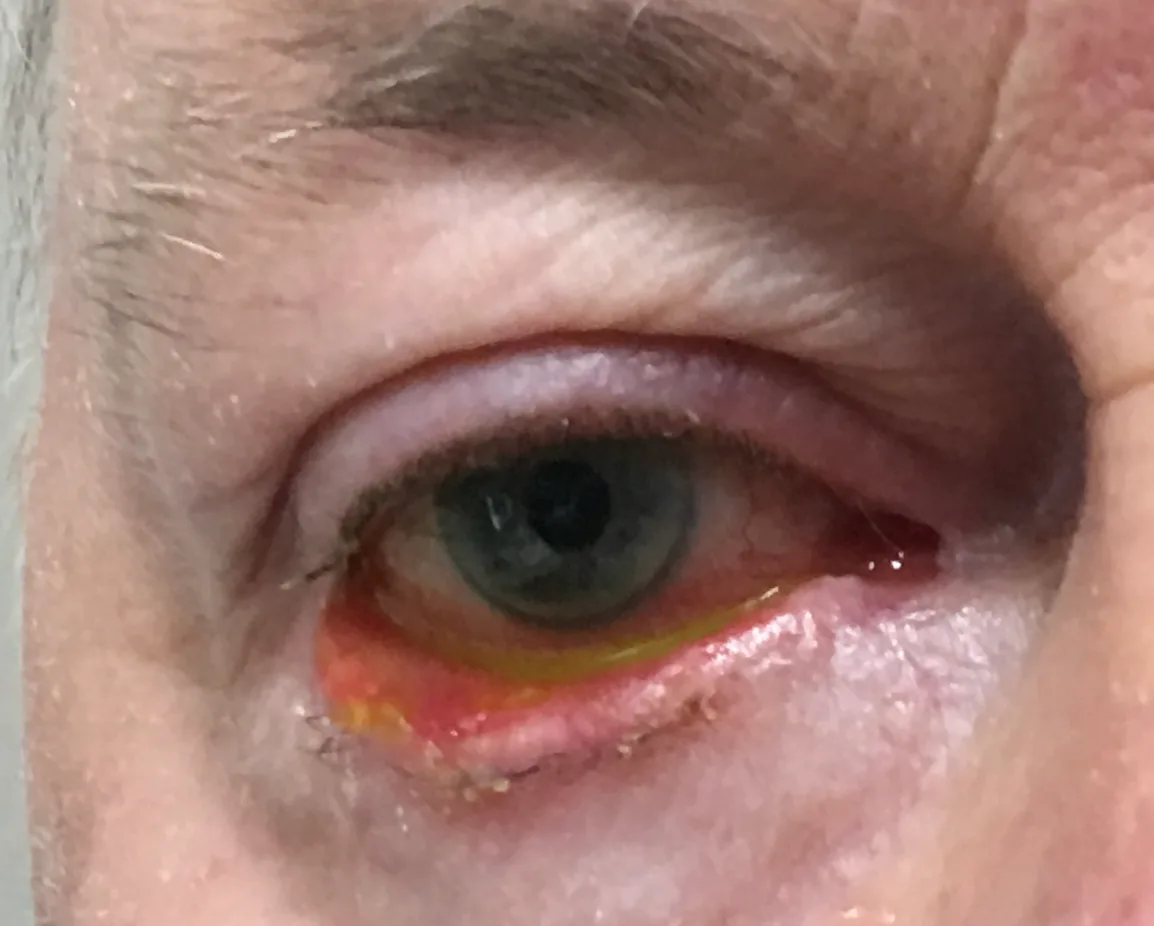
With age, the lower eyelid can loosen enough that it no longer sits comfortably against the eye. There are two common patterns, and they cause opposite kinds of trouble:
- Entropion — the lid rolls inward, so the lashes rub against the surface of the eye. It causes constant irritation, redness, and a gritty sensation, and over time can damage the cornea.
- Ectropion — the lid sags outward, away from the eye. The eye waters constantly, the inner surface of the lid becomes dry and red, and the surface of the eye is left exposed.
Both can usually be corrected with a short day surgical procedure that tightens the lid and restores its normal position against the eye. Symptoms generally settle once the lid is sitting properly again, and the surface of the eye is better protected from further damage.
Correcting an ectropion also matters when cataract surgery is being planned. A lid that sits away from the eye allows the tear film to dry out and the lid margin to harbour a higher bacterial load — both of which are worth addressing before any intraocular procedure. Where an ectropion is present, A/Prof Hunt will usually recommend repairing the lid first and proceeding to cataract surgery afterwards.
Learn more about dry eye treatment →Is This Lump on My Eyelid Skin Cancer?
Most lumps on the eyelid are not cancer. Chalazia, cysts, papillomas, and sun-related skin tags make up the great majority of eyelid lesions, and most are removed straightforwardly when they become a nuisance. But because eyelid skin is so sun-exposed, skin cancers — most commonly basal cell carcinoma — do occur here, and any persistent or changing lid lesion is worth assessing rather than watching indefinitely.
An assessment looks at:
- Whether the lesion has features of concern — change in size or appearance, bleeding, distortion of the lid margin, or loss of lashes
- Whether a biopsy or excision is warranted
- Whether the lesion can be removed straightforwardly in day surgery, or whether its size or location calls for a more involved reconstruction
For straightforward eyelid lesions, A/Prof Hunt performs the excision in a day surgery setting. For larger or more complex cases — particularly those needing a reconstructive flap or involving the lid margin — A/Prof Hunt works directly with oculoplastic colleagues so the right person is doing the right operation. You are not left to organise that yourself.
Learn more about chalazion removal →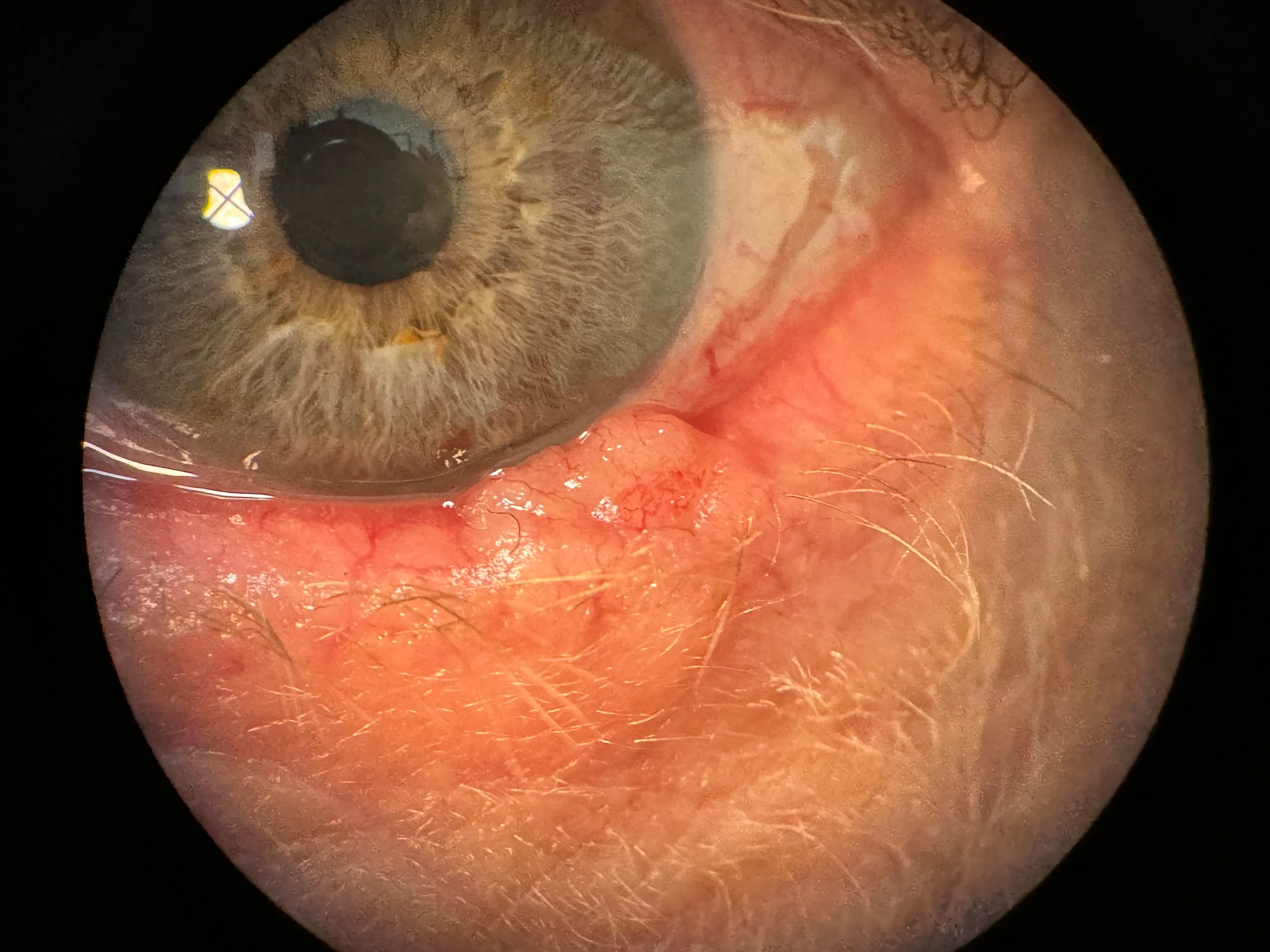
Common Questions
Is upper lid blepharoplasty covered by Medicare?
It depends on whether the surgery is functional or cosmetic. When excess upper eyelid skin is genuinely obstructing the upper visual field, and the strict Medicare criteria for visual obstruction are met, a rebate applies. Purely cosmetic blepharoplasty is not covered.
How long does eyelid surgery take to heal?
Most eyelid procedures heal quickly because the eyelid skin has an excellent blood supply. Bruising and swelling settle over the first one to two weeks, and the fine sutures used on the lid skin are removed at about one week. Most patients are comfortable returning to light activity within a few days, with the final scar maturing and fading over several months.
Will I have visible scars after eyelid surgery?
Eyelid scars usually heal extremely well because the skin is thin and the natural creases hide the incision lines. An upper lid blepharoplasty scar sits within the existing lid crease and is generally very difficult to see once it has settled. Lesion excisions are planned so the closure follows the lines of the lid wherever possible.
Is eyelid surgery done awake or under general anaesthetic?
Most eyelid surgery is performed in a hospital day surgery setting using local anaesthetic with sedation provided by a specialist anaesthetist. You are comfortable and relaxed throughout, but not under a full general anaesthetic. You go home the same day.
What is the difference between a chalazion and an eyelid skin cancer?
A chalazion is a blocked oil gland in the eyelid that forms a firm, round lump — usually away from the lid margin — and it often settles with warm compresses or a small in-room procedure. A skin cancer is more likely to persist or grow, and to involve the lid margin itself. Any eyelid lump that does not settle, or that changes, should be assessed in person.