
Macular Degeneration — What It Is, What It Does to Your Vision, and What Can Be Done
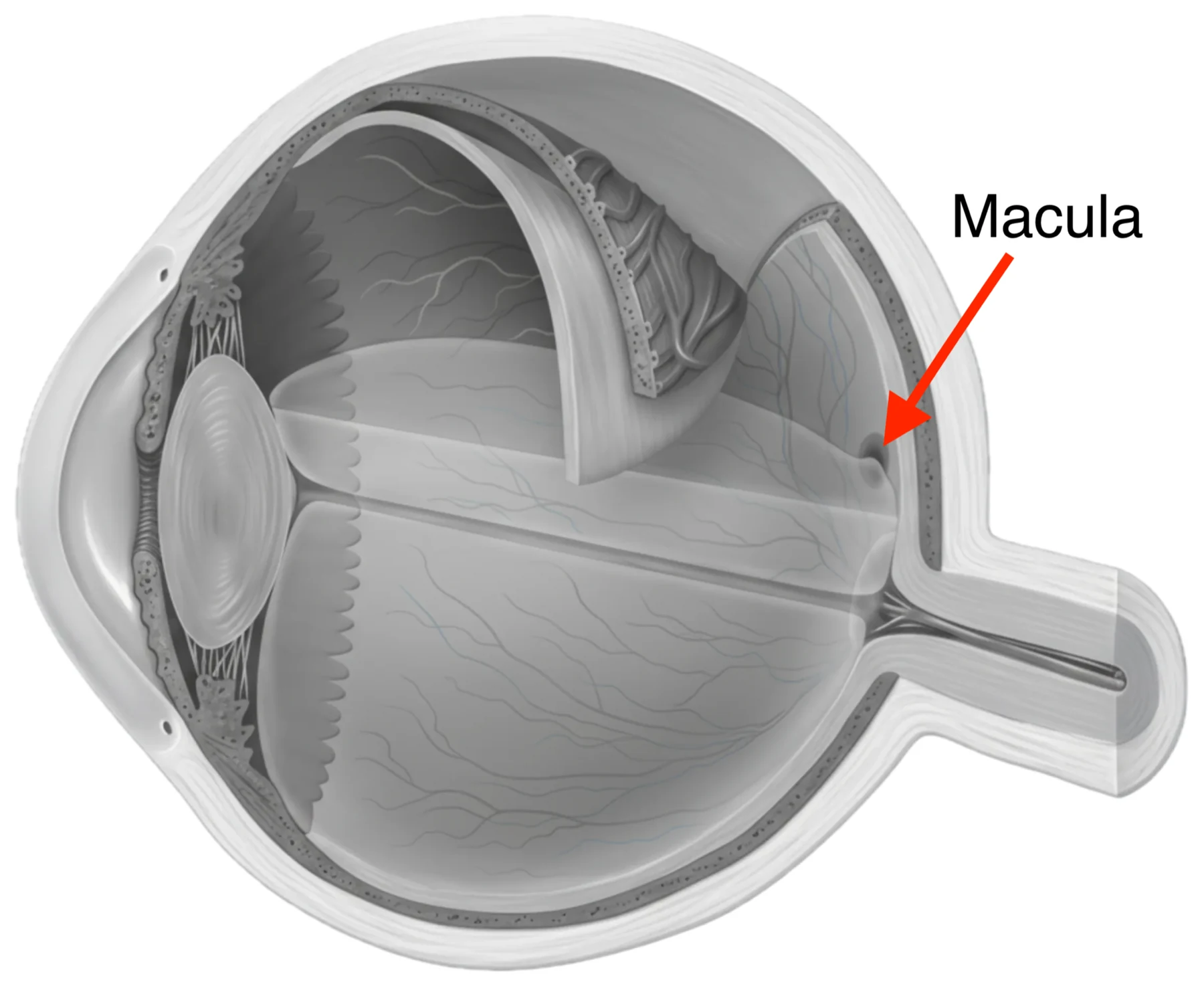
Macular degeneration is one of the most common causes of central vision loss in older Australians. It affects the macula — the small central region of the retina responsible for the sharp, detailed vision you use for reading, recognising faces and colours.
It is an age-related condition: the risk rises steadily after the age of 50, and is higher again in those with a family history of the disease and in people who smoke. Because it affects only the central vision, it does not cause total blindness, but it can take away the vision you rely on most.
The more reassuring part is that a great deal can now be done to slow the disease and, when the more aggressive form develops, to restore and maintain sight. The key to all of it is picking up changes early.
Dry and Wet Macular Degeneration — What's the Difference?
Macular degeneration comes in two forms, and telling them apart is the first and most important step. Dry macular degeneration is the common form — a slowly progressive condition that moves through a series of stages over years. Wet macular degeneration is less common but far more urgent: abnormal blood vessels grow beneath the macula and leak fluid or blood, and central vision can fall away over weeks rather than years.
The two are connected. At any point along the slow course of dry AMD, it can change suddenly and turn wet. That sudden change — new distortion, or a grey smudge in the centre of your vision — is the one to act on immediately, because with wet AMD it is the speed of treatment that protects vision.
Urgent: Act Promptly
New distortion, or a dark or grey patch in the central vision of one eye, may indicate wet macular degeneration. Prompt assessment significantly improves the chance of maintaining useful vision. Contact the rooms for an urgent appointment, or present to Sydney Eye Hospital Emergency if after hours.
The patients who do best are the ones who come in early — whether that means picking up the first, subtle signs of macular degeneration, or starting treatment without delay when it is needed. They are the ones who get the most from what we can offer.
Wet Macular Degeneration — Why Timing Matters
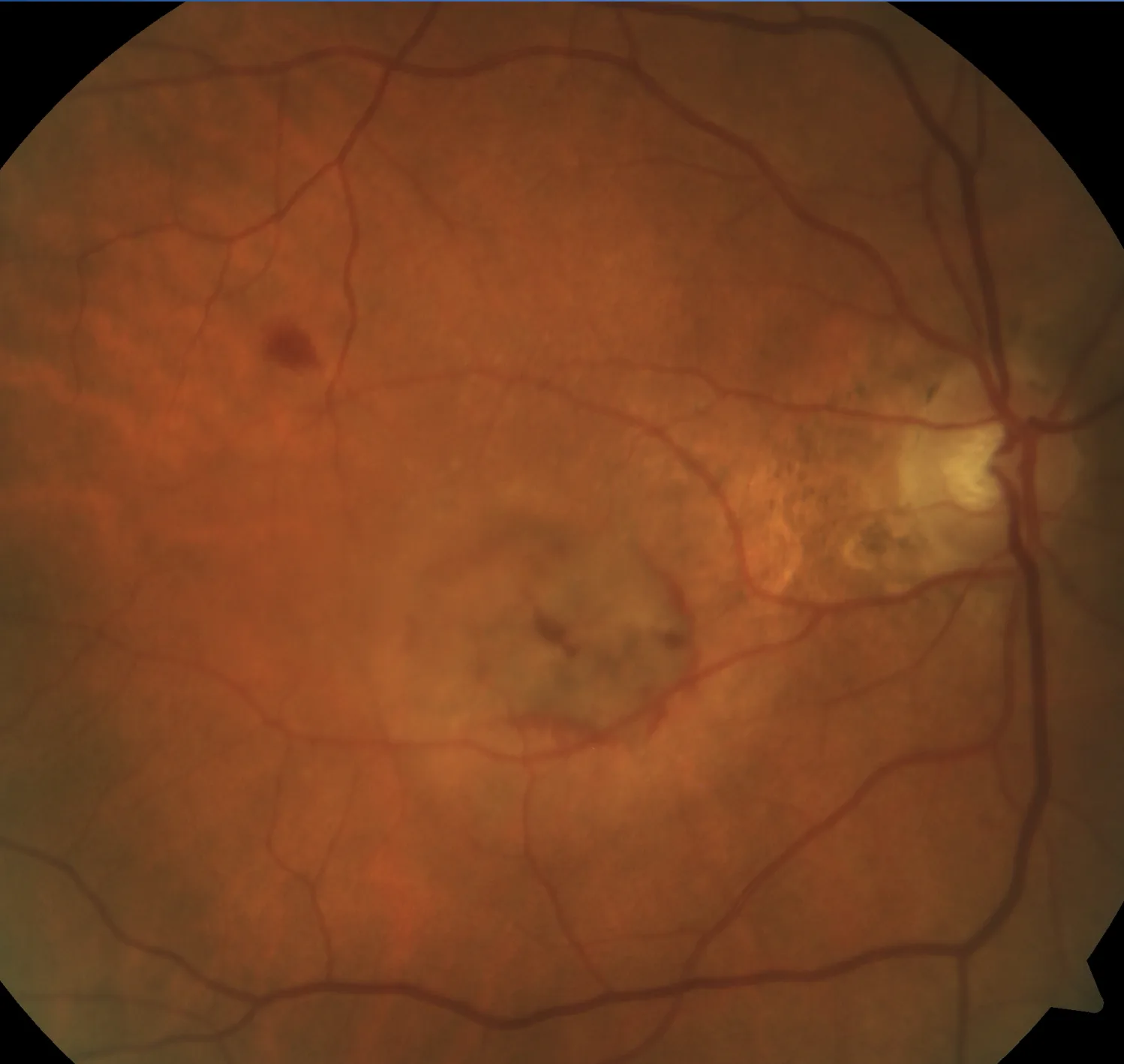
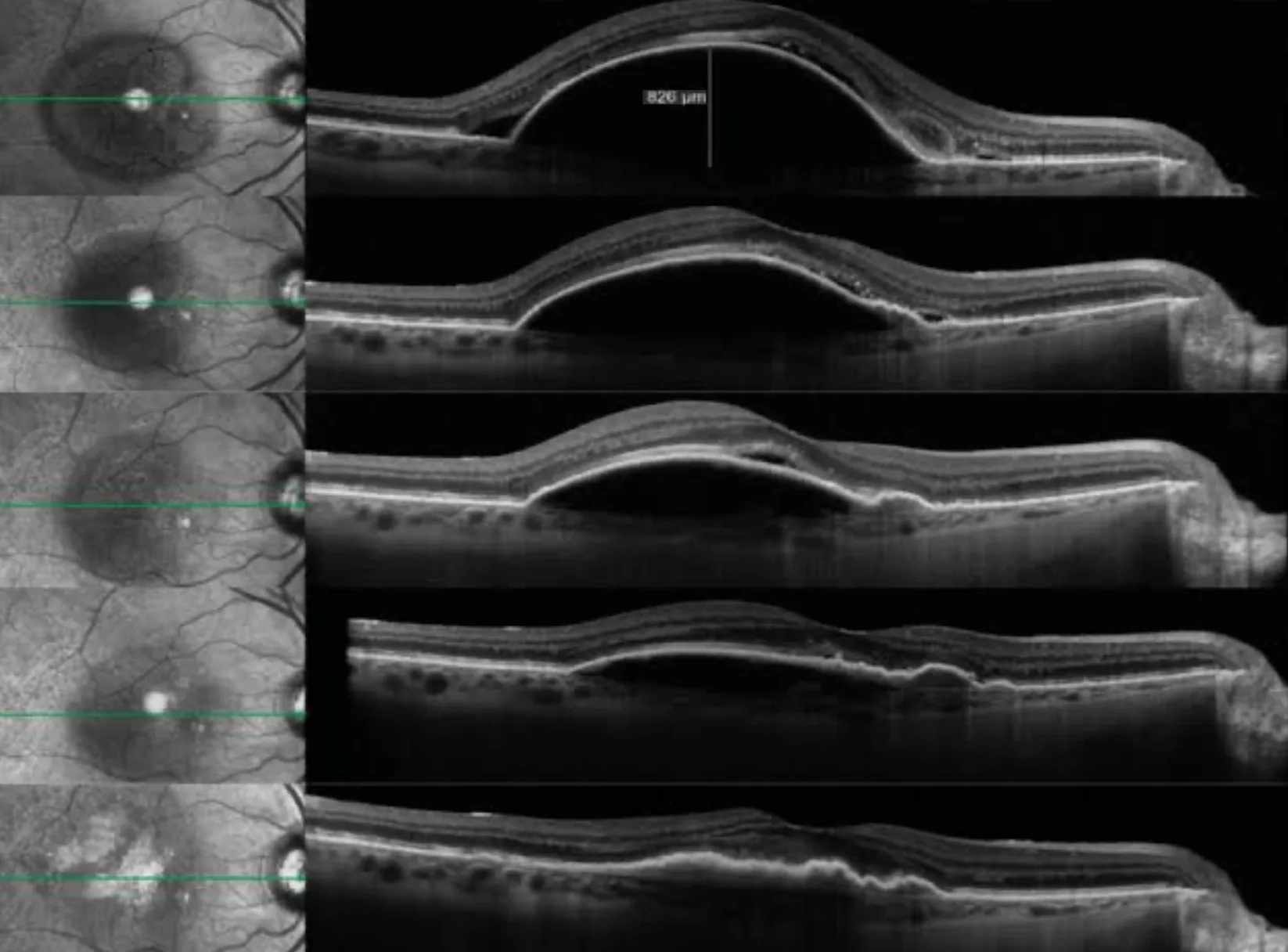
Wet AMD occurs when abnormal blood vessels grow beneath the macula and begin leaking fluid or blood into the retinal tissue. Significant central vision loss can follow over weeks to months, which is exactly why it is the form to catch quickly.
The hallmark symptom is distortion. The changes to watch for are:
- Distortion — straight lines (door frames, ruled lines, tiles) appear bent or wavy
- A grey, dark, or blurred patch appearing in the centre of vision
- Central vision that has changed noticeably over days to weeks in one eye
Symptoms usually start in one eye, and with both eyes open the change can go unnoticed until it is advanced. Covering each eye in turn every so often is a simple way to catch a difference early. If you notice any of these, it needs prompt assessment; this is not a symptom to ignore.
With early treatment, wet AMD can often be stabilised, and in some patients vision improves. Delayed treatment allows more permanent damage to the macula, which usually cannot be undone.
Dry Macular Degeneration
Dry AMD develops gradually over years as the cells of the macula, and the supporting layer beneath them, slowly change with age. Yellow deposits called drusen build up beneath the retina, and as they enlarge and become more numerous the disease moves into its intermediate stage, where the risk of progression rises. Many people have early changes without any idea they are there. The symptoms, when they come, are quiet ones:
- Gradual difficulty reading, particularly in dim light
- Needing significantly more light for close tasks
- Colours appearing less vivid or washed out
- Increasing difficulty recognising faces
- Slower adaptation between bright and dark environments
Because the change is usually so slow, many people adapt without realising how much their vision has shifted — which is why periodic review matters even when things feel stable.
The rate of that progression is not entirely fixed, however. Two things are known to slow it:
- AREDS2 supplements — for people at the intermediate stage, those with large soft drusen in particular, this specific formulation of high-dose antioxidant vitamins and minerals reduces the risk of progressing to advanced AMD. Its value is not in reversing the changes or sharpening vision, but in slowing the march toward the advanced disease that threatens central vision. It is worth checking that any supplement matches the tested AREDS2 formula rather than a generic "eye vitamin".
- Stopping smoking — if you happen to be a smoker, giving it up is one of the most powerful things you can do to slow the disease.
Advanced dry AMD — geographic atrophy
In advanced dry AMD, patches of the macula lose their cells entirely and stop functioning. This is the stage that begins to take away central vision, and how close those patches come to the fovea, the point of sharpest vision, is what matters most.
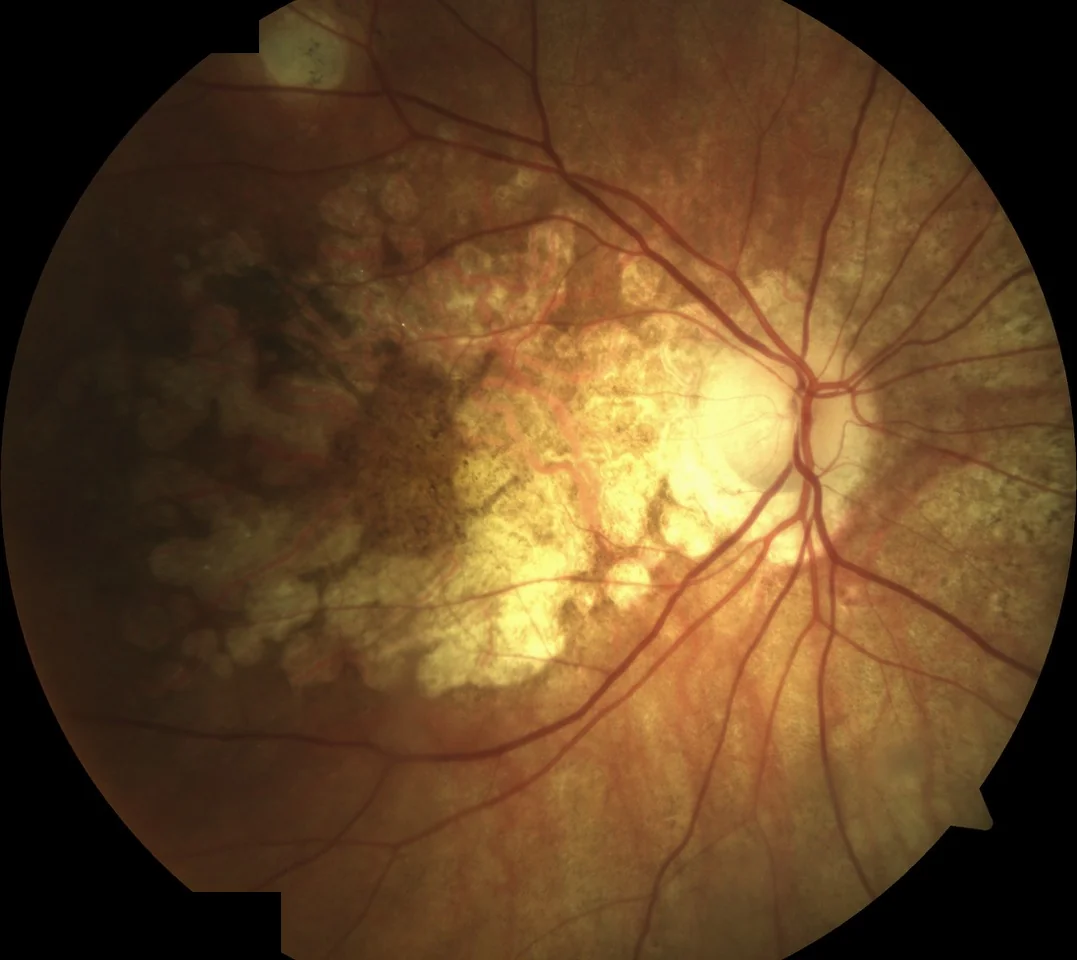
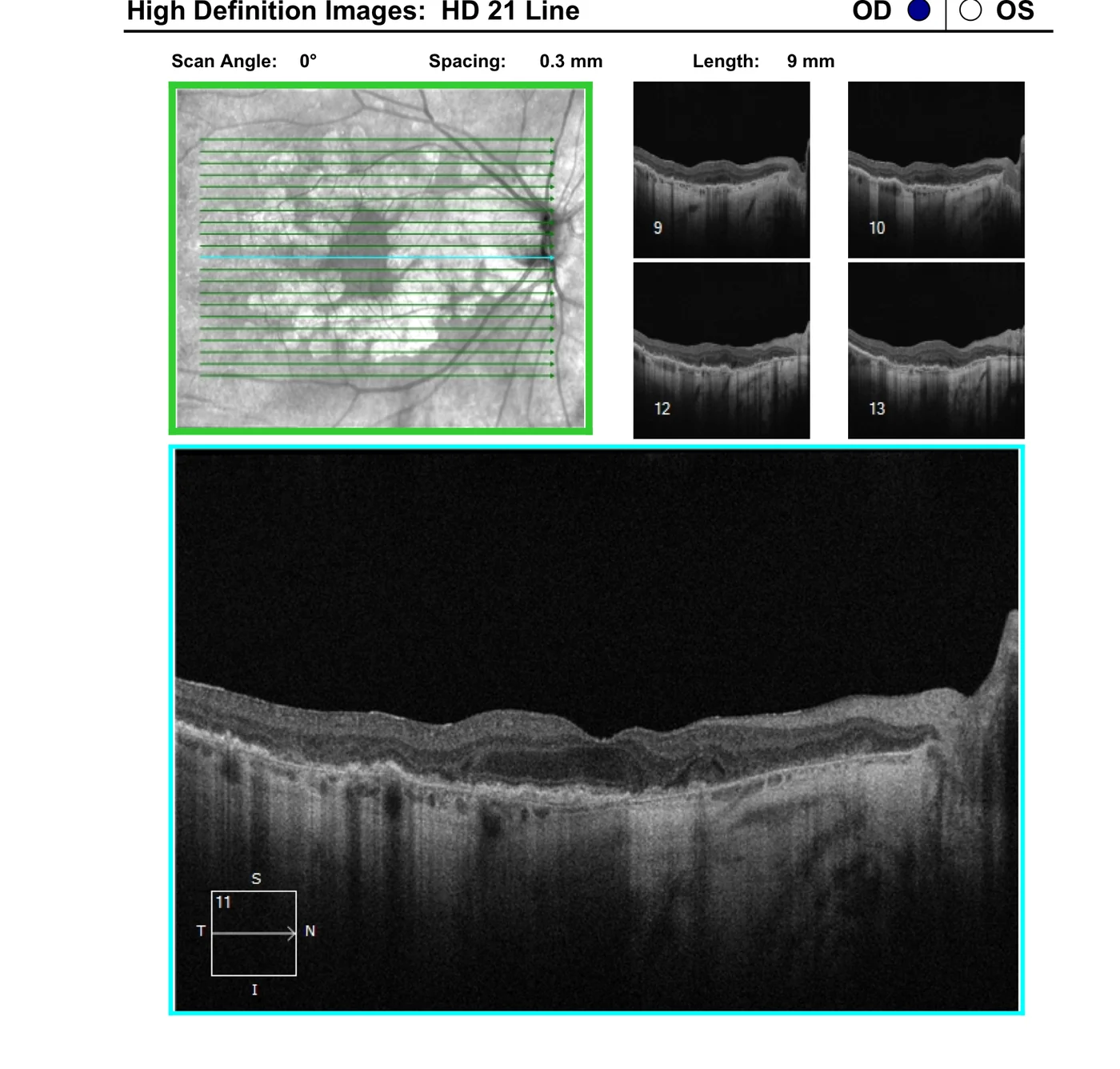
Throughout every stage of dry AMD, the change that matters most is a sudden shift to wet AMD, so any new distortion or fresh smudge in the centre of vision should be checked without delay, however stable things have seemed.
Will Macular Degeneration Make Me Go Blind?
This is the question almost every patient asks, and it deserves a careful answer.
Macular degeneration affects your central vision — the precise, detailed vision you move your eye to look at something with. It very rarely affects peripheral vision. You won't go dark. You won't lose the ability to navigate a room, see people around you, or find your way around.
What does happen, particularly in advanced disease, is that the central vision becomes unreliable or is lost. If you try to look at something and that light falls on a damaged macula it may disappear or be distorted. The aim of treatment is to prevent that progression, and in many patients treated early and consistently, useful central vision is preserved for many years.
How Is Macular Degeneration Treated?
Wet AMD — intravitreal injections
The main treatment for wet AMD is intravitreal injection therapy — anti-VEGF medications injected directly into the eye to suppress the abnormal blood vessel growth and leakage driving the damage. Treatment begins with monthly injections to bring the condition under control, with intervals then adjusted according to how the eye is responding.
This is a long-term treatment. Many patients require ongoing injections for years, though the frequency can often be reduced in eyes that remain stable. Consistency with appointments and retinal imaging at each visit is one of the most important factors in maintaining vision over time.
Treatment is tailored to the individual eye. A/Prof Hunt adjusts both the choice of agent and the schedule based on OCT imaging and visual assessment at each visit.
What to expect from eye injections →Dry AMD — slowing progression
For most dry AMD, there is currently no treatment that reverses the damage already done, so care is directed at slowing progression — the AREDS2 supplements described above for intermediate disease, not smoking, and regular monitoring so that any shift toward wet AMD or the fovea is picked up early.
For advanced dry AMD with geographic atrophy, a newer class of treatment — complement inhibitors, given as an injection into the eye — has been approved in Australia on the basis of its safety and efficacy. Because the decision to start is a considered one, it is worth being clear about what these treatments do and do not offer:
- They do not improve vision, and they do not restore atrophy that has already occurred.
- What they do is slow the rate at which the atrophy enlarges, and that slowing is fairly modest.
- They ask a great deal of a patient — an injection roughly every two months, on an ongoing basis.
- There are risks, as with any intravitreal injection, and one particular to this treatment is that it can increase the chance of the eye developing wet macular degeneration.
- The cost is significant — the medication is not PBS-listed, so it is bought privately.
For those reasons the treatment suits a carefully selected patient: someone whose central macula, the fovea, is still preserved, but where the atrophy is advancing towards it and threatening that central point of sharpest vision. In that situation, holding the atrophy back from the centre for longer can matter a great deal. A/Prof Hunt works through that judgement with each patient individually, so that the likely benefit, the burden and the risks are all understood clearly before any decision is made.
Research in Macular Degeneration
Through the Fight Retinal Blindness! registry at the Save Sight Institute, A/Prof Hunt has contributed to research on long-term outcomes of anti-VEGF therapy in AMD — including how treatment intervals, agent choice, and treatment persistence affect vision years into therapy. Registry research reflects how treatments perform in everyday care, not just selected trial populations.
See A/Prof Hunt's publications →Macular Degeneration Assessment
A/Prof Hunt sees patients with AMD at Eye Surgeons Miranda for new assessments, second opinions, and ongoing injection treatment. Urgent appointments are prioritised when symptoms suggest wet AMD.
For patients with a strong family history of AMD, or those with early dry AMD wanting a clearer picture of their risk of progression, A/Prof Hunt can also advise on newly available genetic tests.