
The Day of Cataract Surgery
Cataract surgery is performed as day surgery: you arrive, have the procedure, and go home the same day.
A/Prof Hunt removes the cloudy lens through a very small incision and replaces it with a clear artificial lens. No stitches are usually required, and for most patients the improvement in vision is noticeable within the first few days.
Getting Ready
There is very little you need to do to prepare. The measurements and lens planning are completed beforehand at your cataract assessment, so by the time the surgery date arrives, the plan for your eye is already in place.
Ahead of the day, the rooms will give you clear, individual instructions — including anything you need to know about eating and drinking beforehand, and which of your usual medications to continue. If anything is unclear, call and ask.
Arrange for someone to bring you home afterwards, as you won't be able to drive on the day. Wear comfortable, loose clothing, and leave eye makeup off on the day of surgery.
On the Day
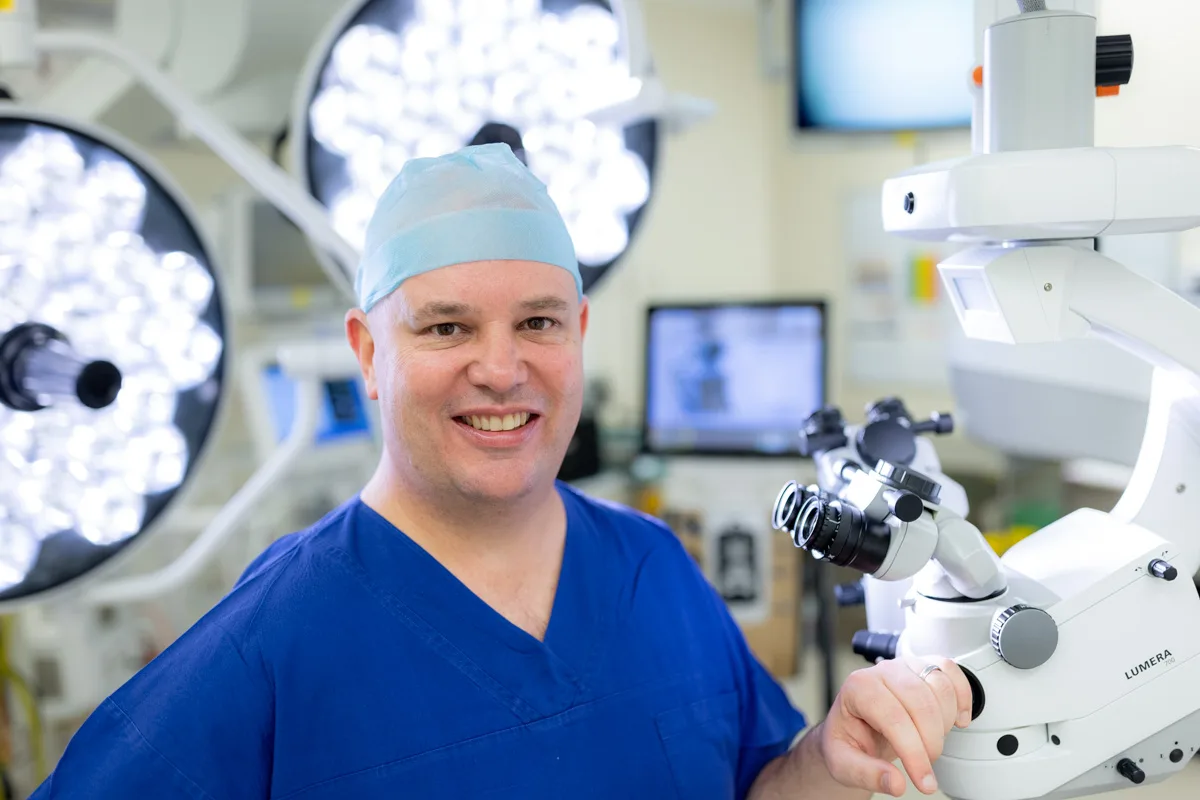
Cataract surgery is carried out at a local day surgery facility. It's natural to feel a bit nervous beforehand, but you're in good hands. A specialist anaesthetist looks after you throughout, supported by an experienced theatre team.
Once you've had some light sedation, sometimes called twilight anaesthesia, most patients settle quickly. The eye is fully numbed, so most patients feel nothing during the surgery and don't see instruments coming.
By the time you're sitting up in recovery with a cup of tea, most patients have little memory of the procedure itself. The most common reaction is surprise that it's already over, and that their anxiety was unfounded.
Going Home
You'll go home the same day, usually with a light protective shield over the eye. Once the team is satisfied you've recovered comfortably from the sedation, you'll be ready to leave.
Vision is often a little blurry at first and settles over the following days. You'll be given eye drops to use and a follow-up appointment, and most patients are able to return to gentle everyday activities soon afterwards.
Recovery: the days and weeks after surgery →The Details
There's more to know about lens options, recovery, risks, and costs. These are covered in detail on their own pages, and discussed with you personally during your consultation.
Common Questions
Will I be awake during cataract surgery?
You will be lightly sedated and relaxed, rather than fully asleep. Most patients stay calm and comfortable throughout and remember very little about the procedure afterwards.
Will it hurt?
No. The eye is fully numbed before surgery begins, so most patients feel no pain. You may notice light and a sense of gentle movement, but not discomfort.
What if I blink or move my eye?
This is one of the most common worries, and it isn't a problem. The eyelids are gently held, so blinking isn't something you need to think about, and the sedation helps you stay relaxed and still. A/Prof Hunt and the theatre team manage all of this for you.
Will I see what is happening?
No. Most patients see only soft light and vague shapes — not instruments or detail. There is nothing alarming to watch.
When can I drive again?
Not on the day of surgery, so arrange for someone to bring you home. Most patients are back to driving within a few days, once vision has settled and A/Prof Hunt has confirmed at the follow-up appointment that it is safe.