
Dry Eye Treatment — IPL Therapy in Miranda
Dry eye that persists despite regular lubricating drops is usually driven by something drops alone cannot fix — blocked or inflamed meibomian glands along the eyelid margins. This is meibomian gland dysfunction (MGD), and it is closely linked to ocular rosacea. IPL (intense pulsed light) targets the inflammation and gland blockage directly, producing longer-lasting improvement than surface lubrication alone.
IPL Treatment — Lumenis M22
Eye Surgeons Miranda uses the Lumenis M22 for IPL treatment — one of the most extensively studied platforms in ophthalmology for meibomian gland dysfunction.
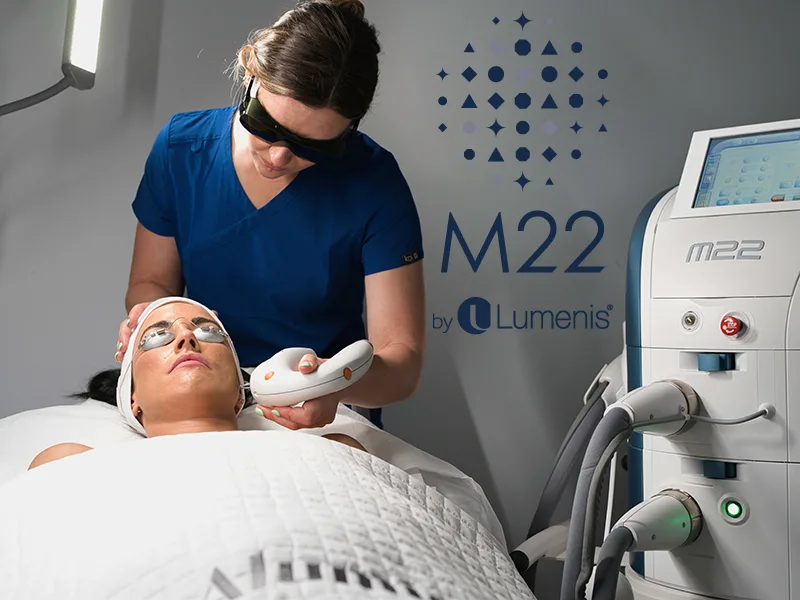
IPL pulses are absorbed by the fine inflammatory blood vessels along the eyelid margins, closing them and reducing the inflammation that keeps the glands blocked. The same gentle warmth softens thickened secretions trapped inside the glands, making them easier to clear. The combination of light therapy and gland expression tends to work better than either step on its own.
Preparing the ocular surface with IPL can also improve outcomes before cataract surgery — stabilising the tear film tends to support more accurate preoperative measurements and reduce postoperative irritation.
IPL is also useful for patients who develop recurrent chalazia, where underlying gland dysfunction is the reason the lumps keep coming back.
Learn more about chalazion removal → Blurred vision — causes and when to seek care → Red eye — when to seek urgent assessment →What to Expect
A typical course is three sessions spaced about a month apart. Most patients notice meaningful improvement during the course, with continued improvement in the weeks after. After a break of roughly six months, a single top-up session can maintain the result if needed.
Each session takes around 15 to 20 minutes and is performed at Eye Surgeons Miranda. Protective eye shields are worn throughout, and most patients find the procedure comfortable — a brief warming or snapping sensation as each pulse is delivered.
Is IPL Right for My Dry Eye?
IPL works best for dry eye driven by meibomian gland dysfunction and eyelid inflammation. It is particularly well suited to patients with:
- Persistent symptoms despite regular lubricating drops
- Visible redness or fine blood vessels along the eyelid margins
- Rosacea or seborrhoeic dermatitis affecting the face
- Blepharitis with meibomian gland plugging
- Contact lens intolerance because of dry eye
IPL is not suitable for everyone. Darker skin tones, active skin infection, and certain photosensitising medications rule it out. Suitability is assessed at the initial consultation.
Common Questions
Does IPL for dry eye hurt?
Most patients find IPL comfortable. Each pulse produces a brief warm or gentle snapping sensation against the skin. Protective eye shields are worn throughout.
How many IPL sessions will I need?
A typical course is three sessions spaced about a month apart. After a break of roughly six months, a single top-up session can maintain the result if needed.
Is IPL covered by Medicare or private health insurance?
IPL for dry eye is not currently covered by Medicare and is not claimable through most private health insurance extras policies. It is an out-of-pocket treatment. The cost is discussed at the initial consultation before anything is booked.
How long do the results last?
Many patients maintain significant improvement for twelve months or more after a course of treatment. Those with ongoing rosacea or chronic meibomian gland dysfunction may benefit from a periodic top-up session.
Do I need a referral?
A GP or optometrist referral is required for the initial consultation to access the Medicare rebate for the assessment. The IPL treatment itself is billed separately as a non-Medicare procedure.