
Proliferative Diabetic Retinopathy: Why Laser and Injections Are Not the Same Thing
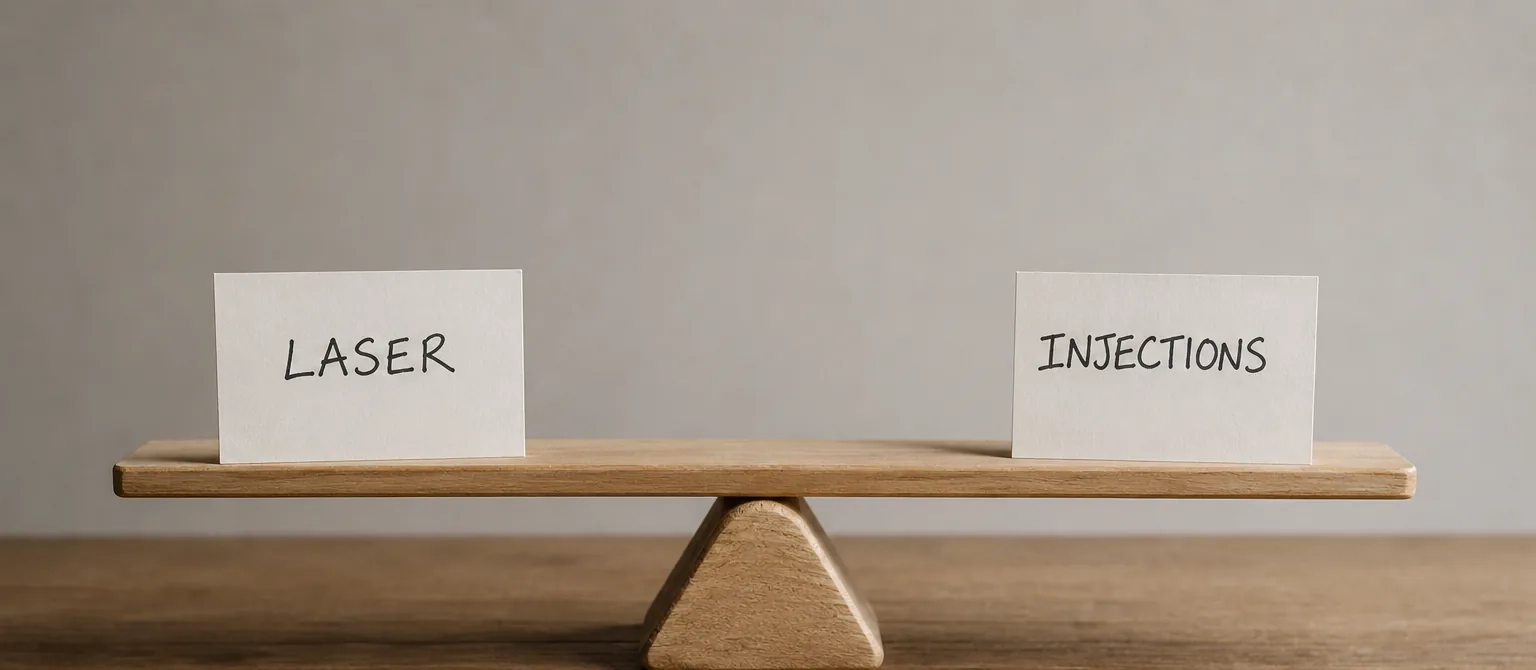
When diabetes starves areas of the retina of oxygen, the eye responds by growing fragile new blood vessels — proliferative diabetic retinopathy. Left alone, those vessels bleed into the eye or drag on the retina, and vision can be lost suddenly. We have two good ways to make them regress: panretinal laser, and injections of anti-VEGF medication into the eye. Patients often assume the injection — no laser, nothing burnt — must simply be the more modern, better option. The truth is more interesting than that.
What the laser actually does. Panretinal photocoagulation treats the oxygen-starved mid-peripheral retina — deliberately, to protect the central retina you read and recognise faces with. By quietening that hungry peripheral tissue, the laser removes the signal that was driving the new vessels in the first place. Because it addresses the cause rather than mopping up the chemical messenger, the regression it produces tends to last. It does not depend on you coming back every month. The trade-offs are honest ones: laser costs a little peripheral vision, and occasionally a course needs topping up.
What the injections do. Anti-VEGF injections work further downstream — they neutralise the very messenger (VEGF) that the vessels are responding to. They act quickly, they spare peripheral vision, and in the large trials (Protocol S, CLARITY) they matched or slightly bettered laser on vision over one to five years, with less macular swelling and fewer operations for bleeding. So they are a genuinely good treatment. But there is a condition attached, and it is an important one: the effect is temporary. Stop the injections, and the vessels can wake up. In the research, a large share of eyes that seemed stable and had injections deferred needed them restarted within a few months.
Where the difference bites — real life. Trials are done in people who turn up. Real patients have hospital admissions, other illnesses, transport troubles, and busy years. Roughly a quarter of patients with proliferative retinopathy end up lost to follow-up for a while — and this is exactly where the two treatments part company. When researchers looked at eyes that dropped out of care, the ones that had been managed with injections alone did markedly worse than the ones that had received laser: far more tractional retinal detachments, and vision that fell and did not come back. The laser eyes, by contrast, largely held their ground. The durable laser scar had quietly acted as a safety net.
I think about the diabetic patient who goes into hospital for something entirely unrelated — a heart problem, an infection, surgery — and misses a run of eye injections without anyone realising. If injections were the only thing holding the retinopathy down, that gap can be enough for the vessels to return and bleed. A retina that has had its laser does not carry the same risk.
Even good laser is not infallible. Now and then, despite reasonably heavy laser, the process recurs and more is needed. The images below are from one such patient: active new vessels and haemorrhage persisting after a solid course of laser, and then, after additional treatment, regression. Worth noting what the “fix” was — more laser, not a lifetime of injections.
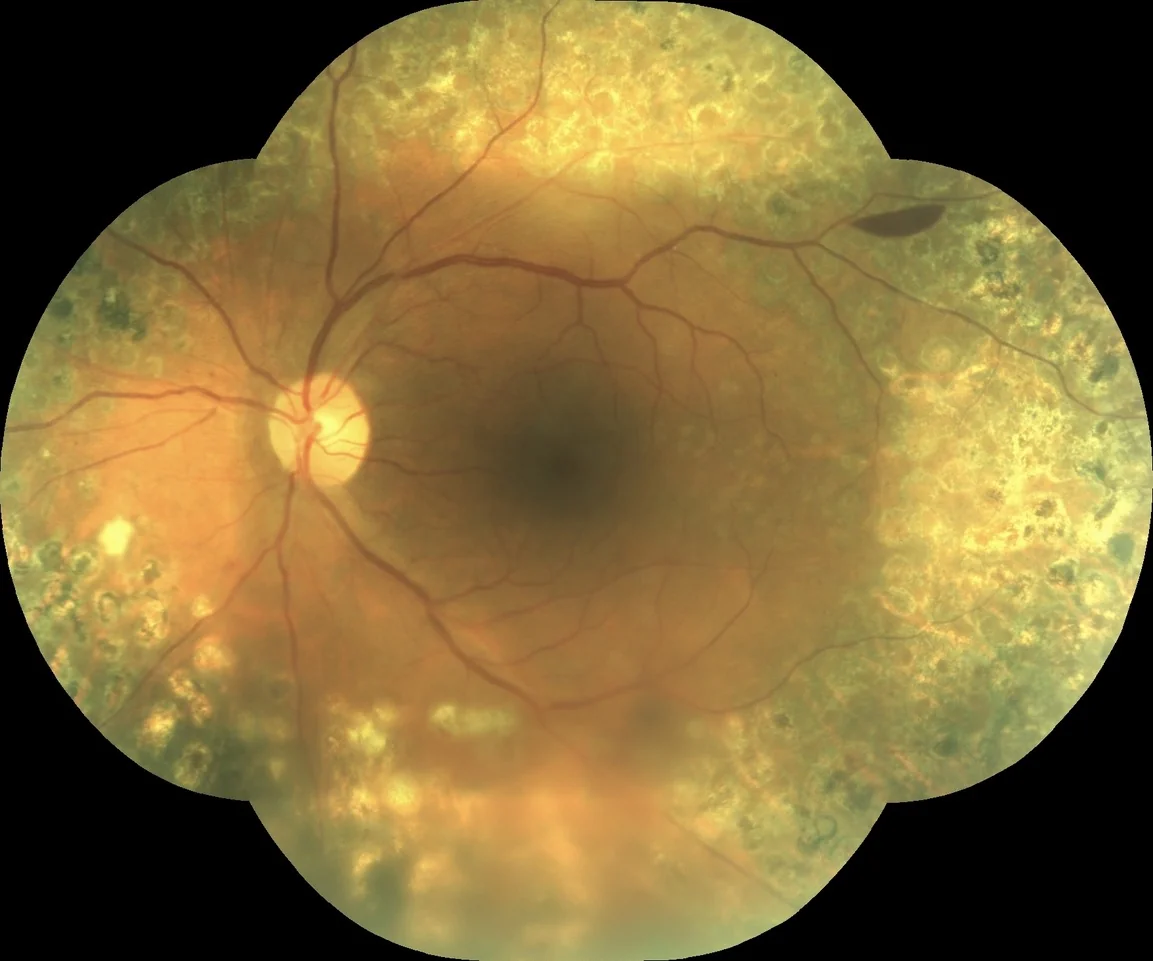
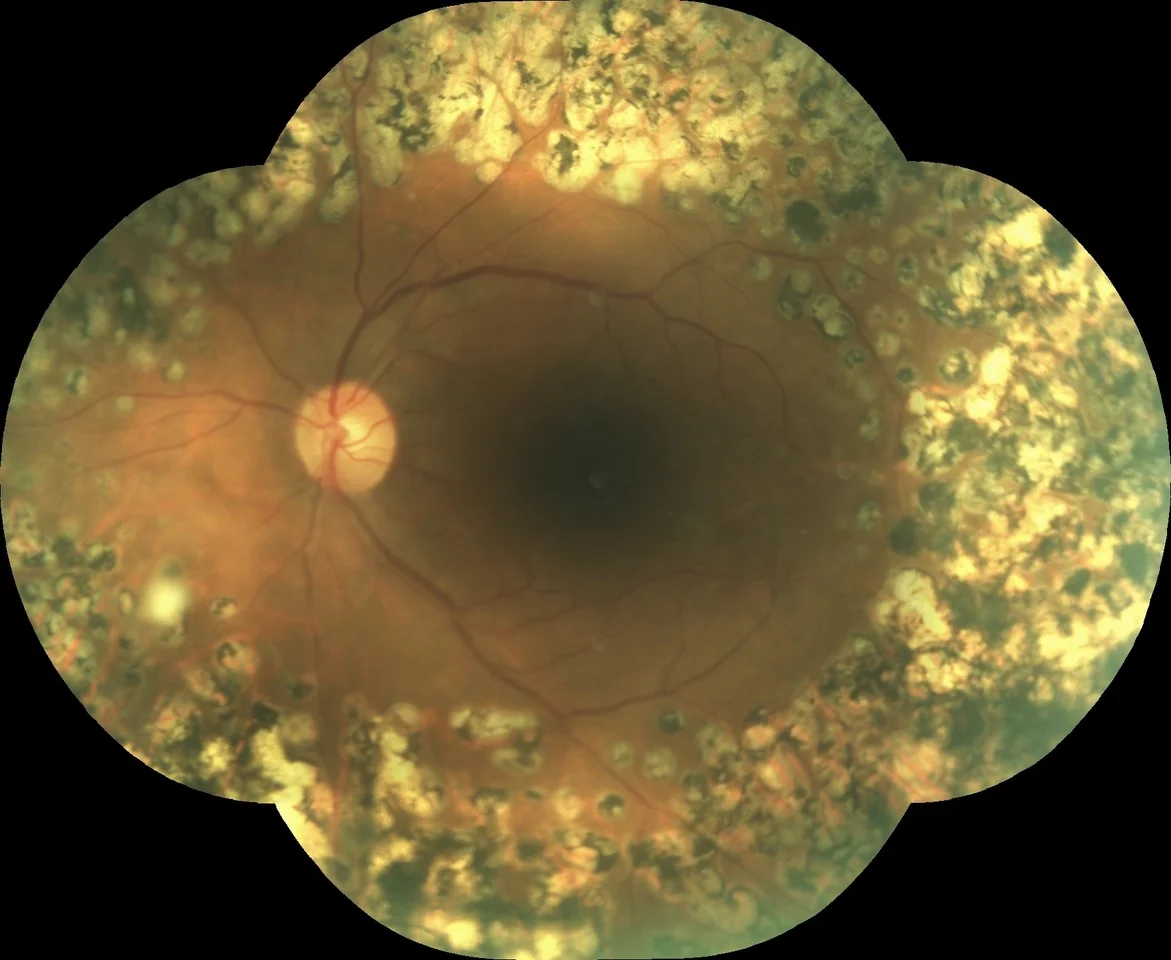
So which is it? Usually, it is not a contest. Injections and laser are often used together — injections to bring things under control quickly, and to treat any macular swelling, while laser lays down the durable foundation. The right balance depends on the person in front of me: how aggressive the disease is, whether the macula is involved, and — candidly — how reliably they can get to their appointments. For someone whose life makes regular injections realistic, an injection-led approach can be excellent. For someone where that is less certain, the staying power of laser is a genuine safeguard.
There is one group where I actively lean the other way. A builder, a roofer — anyone who works at height — depends on their peripheral vision for their safety. Diabetes may already have eroded some of it, and panretinal laser, by its nature, can take more. For those patients I will sometimes choose injections as the first-line treatment, rather than the panretinal laser that has always been my foundational approach, precisely to protect the side vision their work and their safety depend on. It is a considered trade-off rather than a free choice, though: a patient managed this way stays dependent on the injections, and carries that same risk of the disease progressing if the treatment ever lapses.
The one thing that is never optional is review. Proliferative retinopathy can be quiet right up until it isn’t — which is the whole reason we treat it before it announces itself.
General information, not a substitute for individual assessment. If you have diabetes and haven’t had a recent retinal check, or your vision has changed, arrange a review.