
When cataract surgery is needed in both eyes, there is more than one accepted way to proceed.
Some surgeons perform both eyes during the same operation (immediate sequential bilateral cataract surgery), allowing a single visit, one anaesthetic, and one recovery. For carefully selected patients this is a reasonable approach, and in uncommon circumstances it is the option I recommend myself.
This is most often when a patient requires a general anaesthetic rather than the more typical combination of local anaesthetic and light intravenous sedation—for example, someone living with dementia or a developmental disability. Completing both operations during a single anaesthetic avoids exposing them to a second general anaesthetic and is often the kinder course, accepting that both eyes share their small surgical risks at the same time.
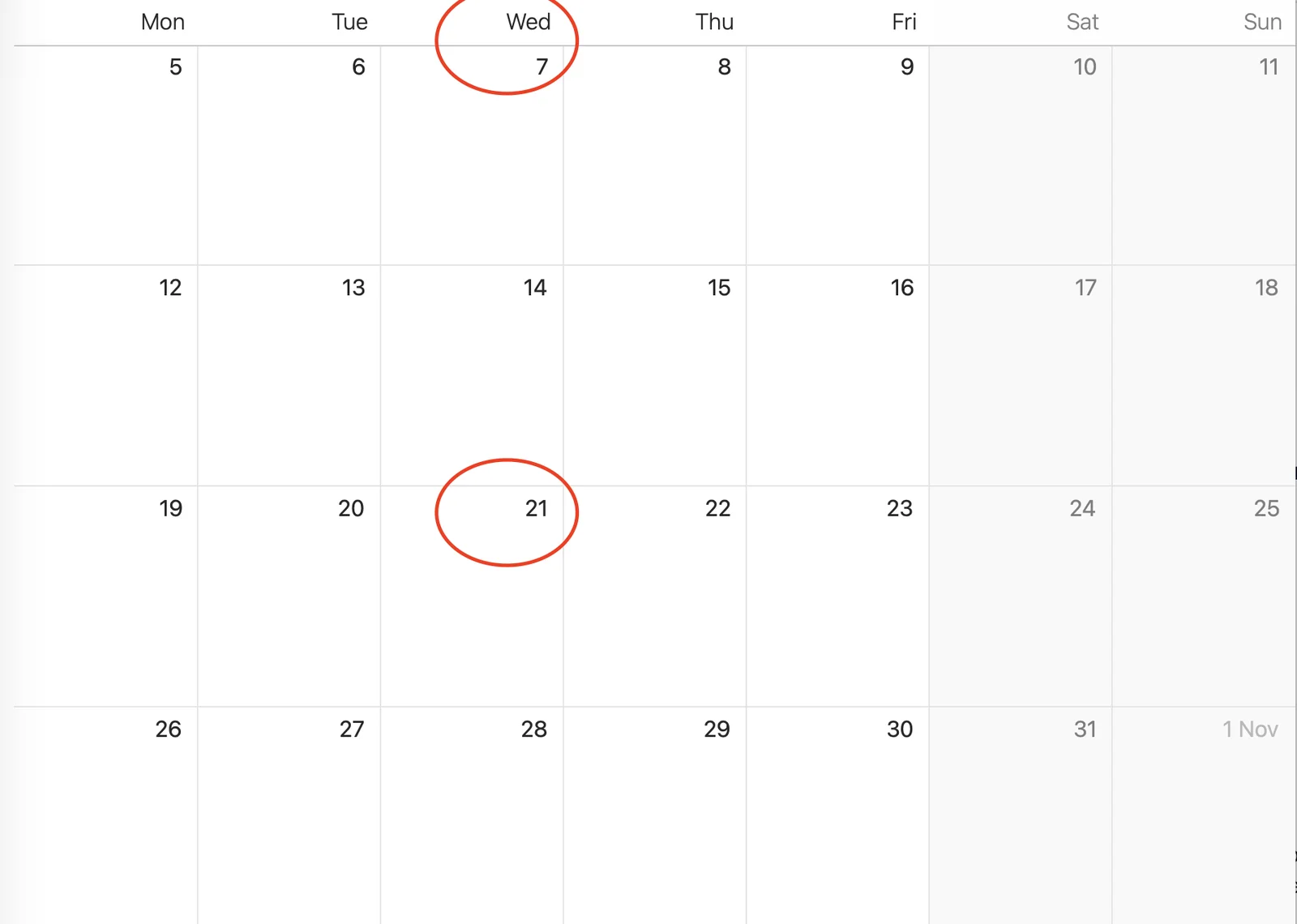
For most patients, however, my preferred approach is different. I perform cataract surgery on one eye at a time, usually separated by two to three weeks. That preference is deliberate rather than traditional, and it reflects the way I believe cataract surgery achieves the best overall outcome.
The day itself
Much of how patients remember cataract surgery has less to do with the operation itself than with how the experience felt. The eye is completely numbed, and most people remain comfortable throughout. Even so, it is entirely natural to feel apprehensive about surgery on an eye.
For most of my cataract surgery, I use a combination of light intravenous sedation together with local anaesthesia around the eye. The eye is completely numb, patients are relaxed, and many remember very little of the procedure. Most people find this to be a calm and reassuring experience.
Treating one eye at a time keeps the experience simpler. After the first operation you know what to expect, making the second much less daunting. Just as importantly, there is never a period when both eyes are recovering together. One eye continues to provide useful vision while the other heals, making everyday activities easier and giving many patients greater confidence during recovery.
Why not simply do both eyes under the same anaesthetic?
Another practical consideration is the type of anaesthetic.
When cataract surgery is performed on both eyes during the same sitting, surgeons will often choose topical anaesthesia using anaesthetic eye drops rather than an anaesthetic injection around the eye. One practical reason is that, after an anaesthetic injection, the eye is commonly padded for a short period while the local anaesthetic wears off. Patching one eye is straightforward; patching both eyes at the same time would leave a patient temporarily unable to see when they are discharged from day surgery a few hours later, making this impractical for most people.
Topical anaesthesia has genuine advantages. It avoids the anaesthetic injection around the eye, vision returns more quickly after surgery, and recovery is often more immediate. The trade-off is that, although surgery should still be comfortable, patients are generally more aware of the procedure because the eye can still move and the profound numbness achieved with an anaesthetic block is not present.
Neither approach is inherently better—they simply represent different balances of comfort, recovery and practicality. My own preference for most patients is a fully numbed eye with light sedation, performed one eye at a time. In my experience this provides the calmest surgical experience while allowing each eye to recover independently before proceeding with the second.
The second eye learns from the first
The more important reason is clinical.
Cataract surgery is planned with extraordinary precision, but it is still biology rather than engineering. Despite careful measurements and sophisticated lens calculations, no surgeon can predict with complete certainty exactly how an individual eye will heal or where its final focus will settle.
When surgery is staged, the result from the first eye provides valuable information for planning the second. If the first eye heals a fraction differently from its intended target, the calculations for the second eye can be refined. If a particular lens choice proves ideal, that experience reinforces the plan. If the outcome suggests a different approach would better suit the patient’s needs, there is still an opportunity to make that adjustment before the second eye is operated on.
There is another advantage that cannot be measured by instruments alone.
Living with the first eye for a week or two often teaches patients something that no consultation beforehand can fully predict. One person discovers they would prefer slightly sharper distance vision. Another realises they would value a little more near vision, even if it means occasionally wearing glasses for distance. These are not right-or-wrong decisions—they are personal preferences that only become apparent after experiencing the result.
When surgery is performed sequentially, those insights can help guide the second eye. Rather than simply repeating the original plan, the second eye can be tailored to complement the first and better match what the patient now knows they want. In that sense, the second operation benefits not only from the surgeon’s experience, but also from the patient’s own experience of living with the first eye.
This is particularly valuable when selecting premium intraocular lenses or refining refractive targets. Cataract surgery is not simply about removing the cloudy lens—it is about achieving the visual outcome that best suits the individual sitting in front of me.
Two eyes, two separate risks
Serious complications after cataract surgery are fortunately uncommon, but they are not impossible.
When surgery is staged, those uncommon risks are encountered one eye at a time rather than both simultaneously. There is reassurance in seeing the first eye recover well before asking the second eye to undergo surgery. If an unexpected problem were to arise—which is rare—it affects one eye while the other remains untouched.
For me, preserving that additional margin of safety is an important part of good surgical care.
Where same-day surgery fits
None of this means that same-day surgery is the wrong approach.
For appropriately selected patients it has genuine advantages. There is one recovery, fewer appointments, less time away from work or family, and a quicker return to having both eyes corrected. For patients who would find multiple visits difficult, or who place a high value on completing everything at once, it is an entirely reasonable option and one I am always happy to discuss.
My own preference simply reflects a different balance. I am naturally drawn to efficiency, yet I deliberately choose the less efficient path for most patients because I believe it produces a more considered outcome. The extra fortnight between operations allows the second eye to benefit from everything learned from the first—both medically and personally.
Cataract surgery is usually performed only once in each eye during a person’s lifetime. My view is that, when circumstances allow, it is worth taking a little more time to give each eye the individual attention it deserves. That philosophy underpins the way I approach cataract surgery: not simply to perform an excellent operation, but to give each patient the greatest opportunity for the best long-term visual result and the most comfortable overall experience.
If you would like to discuss whether this approach is right for you, I would be pleased to see you for a cataract assessment. Please call (02) 8544 0719, or ask your GP or optometrist to send a referral to Eye Surgeons Miranda.